iShares NASDAQ Biotechnology Index logo SG Americas Securities LLC increased its stake in iShares NASDAQ Biotechnology Index (NASDAQ:IBB) by 28.6% in the fourth quarter, according to its most recent 13F filing with the Securities & Exchange Commission. The institutional investor owned …
Normal Type
We are Normal Type
Jennison Associates LLC Trims Stake in bluebird bio Inc (BLUE)
bluebird bio logo Jennison Associates LLC trimmed its holdings in bluebird bio Inc (NASDAQ:BLUE) by 18.7% in the 4th quarter, according to its most recent disclosure with the Securities and Exchange Commission. The firm owned 540,697 shares of the biotechnology company’s stock after selling …
iShares NASDAQ Biotechnology Index (IBB) Position Increased by SG Americas Securities LLC
iShares NASDAQ Biotechnology Index logo SG Americas Securities LLC increased its stake in iShares NASDAQ Biotechnology Index (NASDAQ:IBB) by 28.6% in the fourth quarter, according to its most recent 13F filing with the Securities & Exchange Commission. The institutional investor owned …
How to Convert Blog Readers to Leads
17 comments, 223 likes on Facebook, and 88 retweets.
You’re writing stuff, and people are reading it. They’re clicking your links and arriving at your blog. Your efforts are finally paying off with a steady stream of traffic.
We’re not going to focus on the importance of a business blog. You know it’s crucial to business success in the 21st century:
- 85.1% of American households have some sort of computer, to say nothing of the prevalence of smartphones.
- Marketers that prioritize blogging as part of their efforts are 13x more likely to see a positive return-on-investment.
- The number one challenge for marketing departments is generating traffic and leads. A frequently updated blog can kill two birds with one stone.
- Nearly 80% of people identify as blog readers.
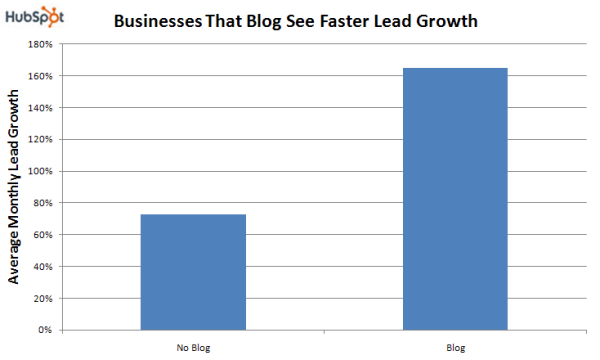
- Companies that blog generate 67% more leads than those who don’t, 434% more indexed pages, and 97% more indexed links…all of which lead to better SEO and ranking.
- 70% of B2C marketers use blogging in their marketing efforts, second only to social media (89%) and email (86%). The numbers are even higher in the B2B sphere, where 79% use blogging, 92% use social media, and 93% use email.
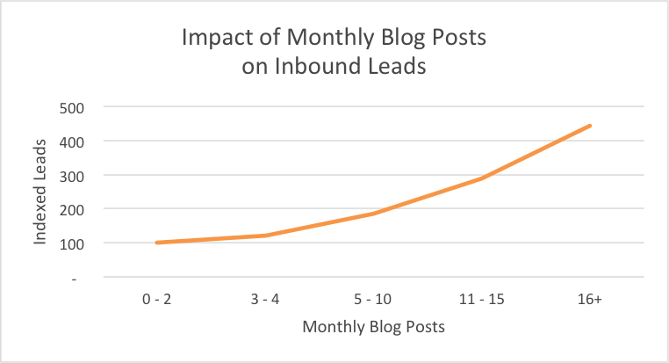
- More is more: those that publish 16+ posts per month generate nearly 3.5x more traffic and 4.5x more leads than those that only publish between 0-4.
Blogs are a popular, effective, and affordable way to bring people to your digital domain. That’s the good news.
The “bad” news? Traffic generation is only half the battle. Pageviews, likes, tweets, and comments are nice, but none of them are the ultimate goal. You need to convert that traffic into leads. According to Forrester Research, around 97-98% of your visitors leave without taking an action or identifying themselves.
They may absolutely love your posts. They may come back again and again. They may consider you an authority and expert in your industry. But the vast majority pop in, read, and leave. You have to do something to take it to the next level. Can you afford to let 98% of your potential leads disappear without a trace?
Traffic generation combined with lead generation make your blog a worthwhile investment. Everything else – likes, retweets, comments – are nothing but vanity metrics. People like your posts and that gives you a nice little ego boost, but that and $3.50 might get you a coffee at Starbucks.
You need to actively generate both traffic and leads. Traffic without leads is meaningless. Leads without traffic will eventually dry up.
Here’s the best news: a frequently updated blog with high quality, valuable content is a lead generation machine…when done properly.
Small to mid-sized (SMB) businesses that blog experience 126% more lead growth than those that don’t bother.
So increase your traffic. There are plenty of great guides and tutorials on how to do that. Just don’t forget about the lead generation part of the equation. Remember:
Traffic generation + lead generation = digital marketing bliss
That said, you don’t want to explicitly bombard your readers with aggressive tactics. No one likes a pushy salesperson.
Nor do you want to be so subtle that no one even notices your trying to convert them from visitor to lead.
Find the middle ground with these tactics to nudge your traffic into lead territory because that’s where they want to go.
If you want them to do something, you’ve simply got to ask.
Call-to-Action
For some of you, this might be a wake-up call. Your blog posts need a call-to-action. Every one of them. If you’re ending your posts with nothing more than an invitation to leave a comment, you’re doing it wrong. You need to get your visitors to do something: sign up, download, click, read something else, subscribe, install, contact you, and so on.
Are you asking? Are you giving them those opportunities to convert, or just hoping they’ll decide to do so on their own?
A high quality blog post without a compelling CTA is a lead lost. They’re already on your site. They’re already interested and engaged with you and your brand. So give them more.
A strong CTA is action oriented, benefit-to-them driven, visual, persuasive, and ideally creates a sense of urgency.
But it also needs to be easy to find. There are several places you could locate your CTA on your site:
- At the top of the page
- At the end of the post
- Within the post itself
- In the sidebar
- As a floating or scrolling popup
- As a sliding popup
- As a full-screen overlay
You don’t want to crowd the page and choose them all. You need to select one or two that maximize exposure on your blog and resonate with your readers.
And you do that by testing. In real estate, the axiom is location, location, location. In digital marketing it’s test, test, test.
“Almost any question can be answered, cheaply, quickly and finally, by a test campaign. And that’s the way to answer them – not by arguments around a table. Go to the court of last resort – the buyers of your product.” ~Claude Hopkins
Pick a few, set up an A/B test, and see what actually works best. Test various locations, types, colors, designs, copy, offer, and more. Zero in on the single most (or top two, or top three) powerful to turn your traffic into your leads. Use Google Optimize, VWO, Optimizely, or a similar service to make it fast and easy.
While only you can ultimately decide what works best for your blog, these are a few popular and efficient tactics to test.
Hello Bar
When someone arrives on your blog, they’re at the top of the page, and there’s no guarantee they’re going to scroll down any further. Putting your CTA at the very top, then, makes a lot of sense.
The Hello Bar is a very simple but highly effective tool that places your call-to-action in a thin, attention-grabbing band across the very top of your page. Instantly recognizable, static, and stays there even if they do decide to scroll down.

Using just a hello bar, DIYThemes generated just under 1200 new subscribers in only 30 days.
While the Hello Bar is perhaps the industry standard, there are alternatives available that do the same thing:
- SalesPanda
- Sumo SmartBar
- WP Notification Bar
- Sleeknote
- OptinMonster
You can also find several free WordPress plugins, but remember that you get what you paid for.
A hello bar can be used to encourage social engagement or email subscriptions, promote new products or services, and more.
In-text CTAs
According to recent analysis by Chartbeat, most people don’t read your entire blog post. In fact, a full 10% never scroll at all, while the majority stop after scrolling through about 60% of it.
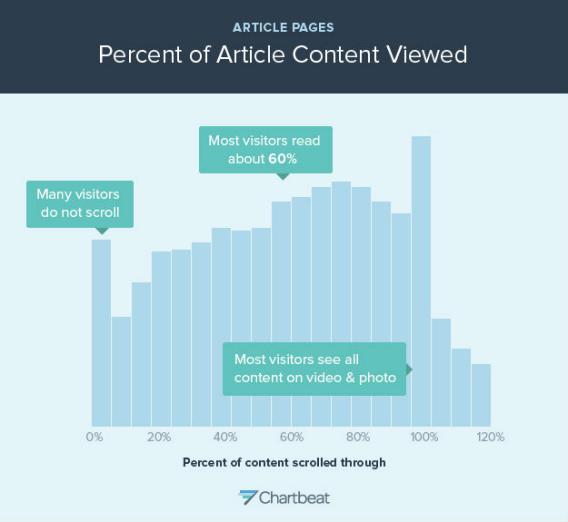
You can still get your call-to-action in front of those individuals with an in-text CTA.
Some of you may be thinking that the hello bar solves this problem. It’s at the top and seen by everyone. That’s true in theory. But let me introduce you to something called banner blindness.
Because we’re so used to them, because we’re inundated with them everywhere while online, many of us either choose to ignore or subconsciously block out static banners and ads. We just don’t “see” them. This is banner blindness at work, and your colorful hello bar may fall victim to it.
But an in-text call-to-action that’s either a direct or indirect part of your blog post is different. Include 1-2 in the first 60% of it, and you’re going to have a lot of eyes on it as they read.
Hubspot generates between 47-93% of their leads via what they’ve labelled anchor text CTAs (compared to only 6% for end-of-post banners).
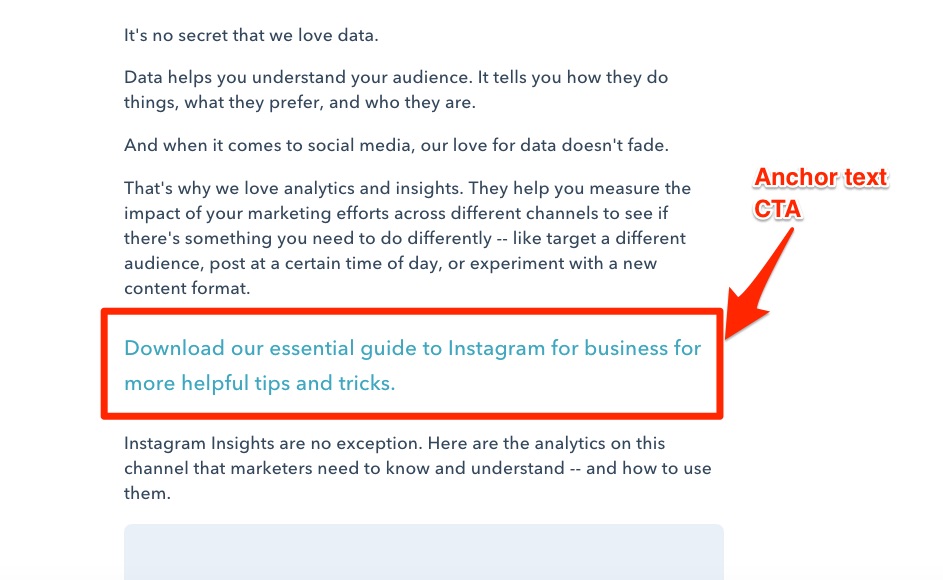
It’s a bigger font and different color to stand out, but still relevant to what they’re currently reading about in the blog post. Value added. Visitor to lead.
That same analysis revealed that anchor text CTAs combined with internal link CTAs represent a whopping 83-93% of their leads.
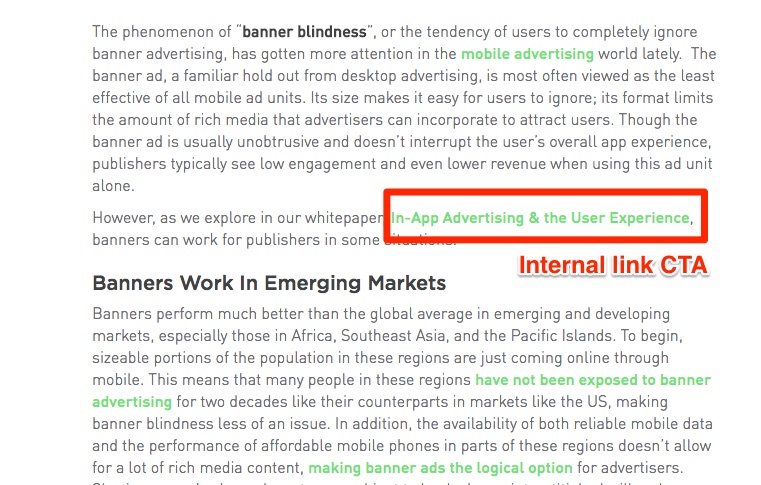
As you can see, internal link calls-to-action are part of the blog post itself. Click one, and it takes you to a landing page to subscribe or download something relevant to the topic at hand.
Location, Location, Location
Besides the top of the page and in the post itself, you can place a CTA virtually anywhere on your page. Test each one to see what works best for you.
Static Sidebar
A static banner in the sidebar is widely used in the blogosphere because it typically works quite well. Almost every blog you visit will likely have at least one inviting you to either subscribe to the email newsletter or contact the author.
It’s unobtrusive. It’s not “in the face” of your readers. It’s not annoying. It’s just there, quietly doing its job of helping to convert traffic to leads.
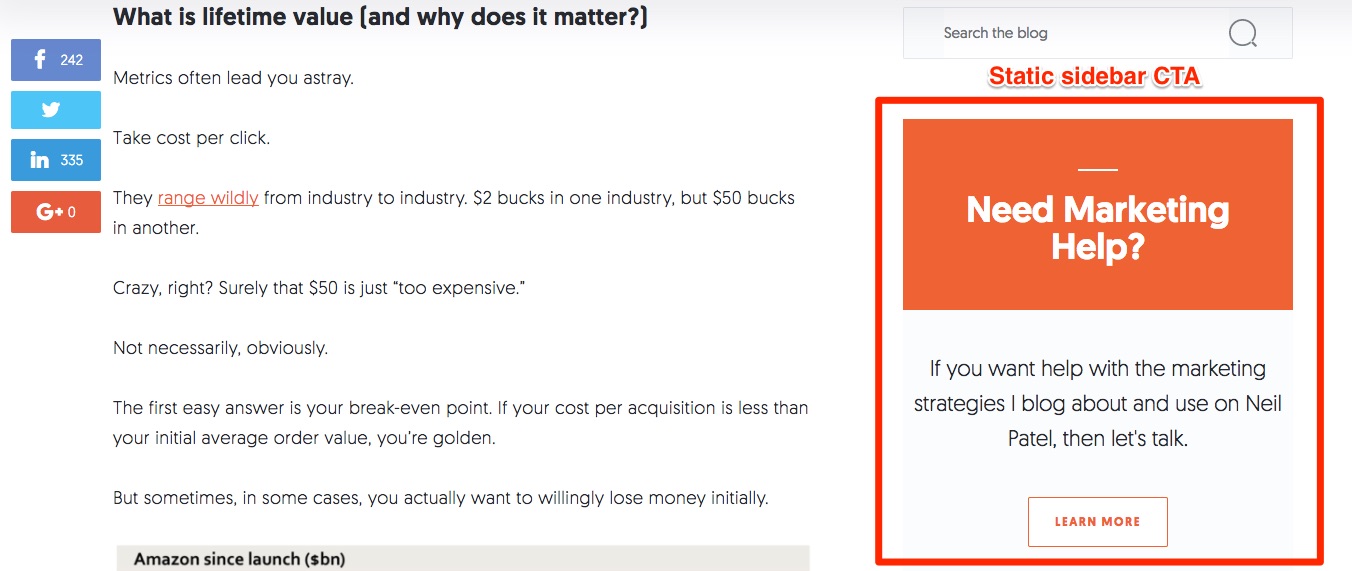
That said, it shouldn’t be your only tactic. The sidebar CTA is easy to ignore, subject to banner blindness, and gone as soon as they scroll down. Use it in partnership with something else.
AdEspresso found a 0.4% conversion rate (CVR) for their static sidebar CTAs.
Scrolling Sidebar
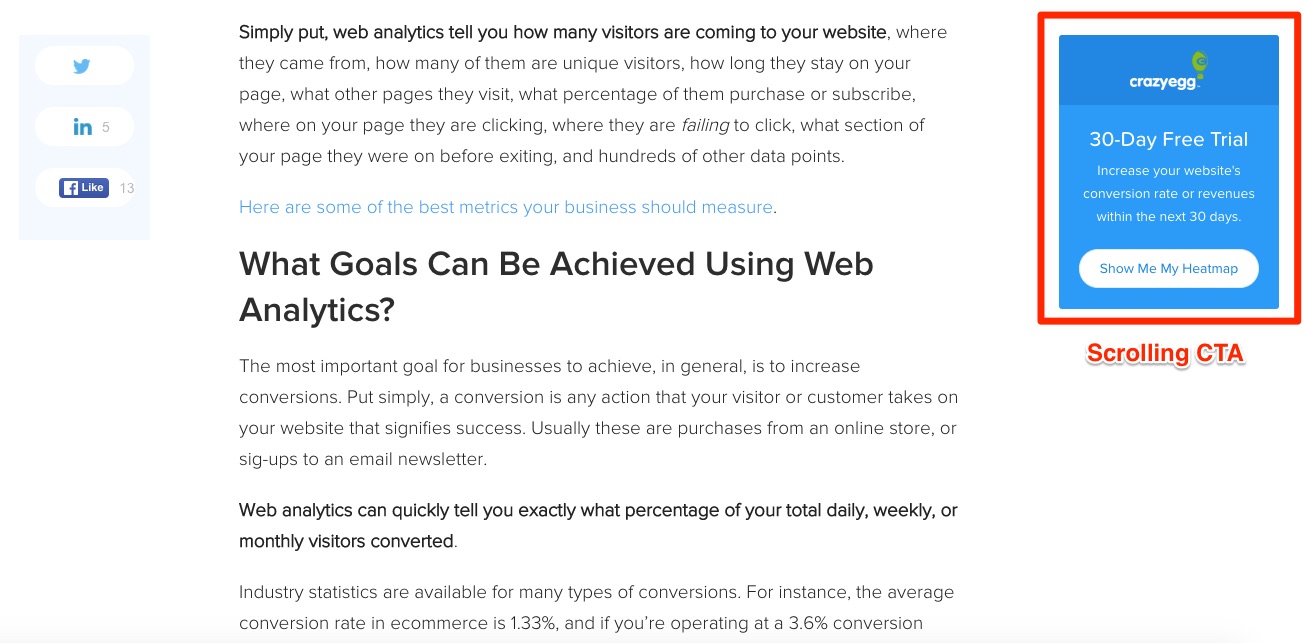
A scrolling CTA looks very similar, but it follows the reader down the post. Because of this mobility, it tends to stand out a bit more and gives the reader more time to decide to click. AdEspresso scrolling ads had a CVR nearly double – 0.76% – the static rate.
Slide-in or Popup
A slide-in popup or overlay is the next logical step in the evolution of the call-to-action. It relies on a trigger – say, X% of the page scrolled, or X number of seconds on page – before it slides in from the side, top, or bottom.
In doing so, it’s only revealed to those readers that have already demonstrated real interest in the post. If they’ve scrolled down 75% of the way – past the 60% where most visitors stop – or spent at least 90 seconds reading, then you’ve got their attention. Strike while the iron is hot.
OptinMonster, Sumo, and NinjaPopups are three respected options to give these a try. Popups delivered a 2.5% CVR for AdEspresso, while others have experienced an impressive 10x higher email subscriptions after introducing the strategy to their site.
You can customize and experiment with everything from where, when, and why to find the perfect combination.
Exit Intent Overlay
An exit overlay works in much the same way, but is only triggered when someone demonstrates their intent to leave by moving the cursor towards the tab, address bar, or back button on their browser.
Remember when I said that 97-98% of your traffic leaves without completing an action? An exit popup or overlay can pull back at least some of those lost leads.
Demonstrate intent to leave on the DODOcase website, and this pops up:

This is a great example of a lightbox overlay. The box takes center stage, overlaying and darkening the rest of the website. It stands out, and gives each visitor a clear choice between this or that.
An exit popup can offer a special discount or coupon, collect feedback, introduce a useful lead magnet, suggest another product or blog post, recommend your newsletter, or whatever else you want to dangle in front of them to tempt them to stay and convert.
Welcome Mat
When a visitor first arrives at your site, take advantage of the opportunity to convert immediately with a welcome mat. This whole page overlay displays a compelling call-to-action before revealing the post or page they’ve clicked on.
Navigate to ClickMinded, and you don’t initially see their homepage, you see this:
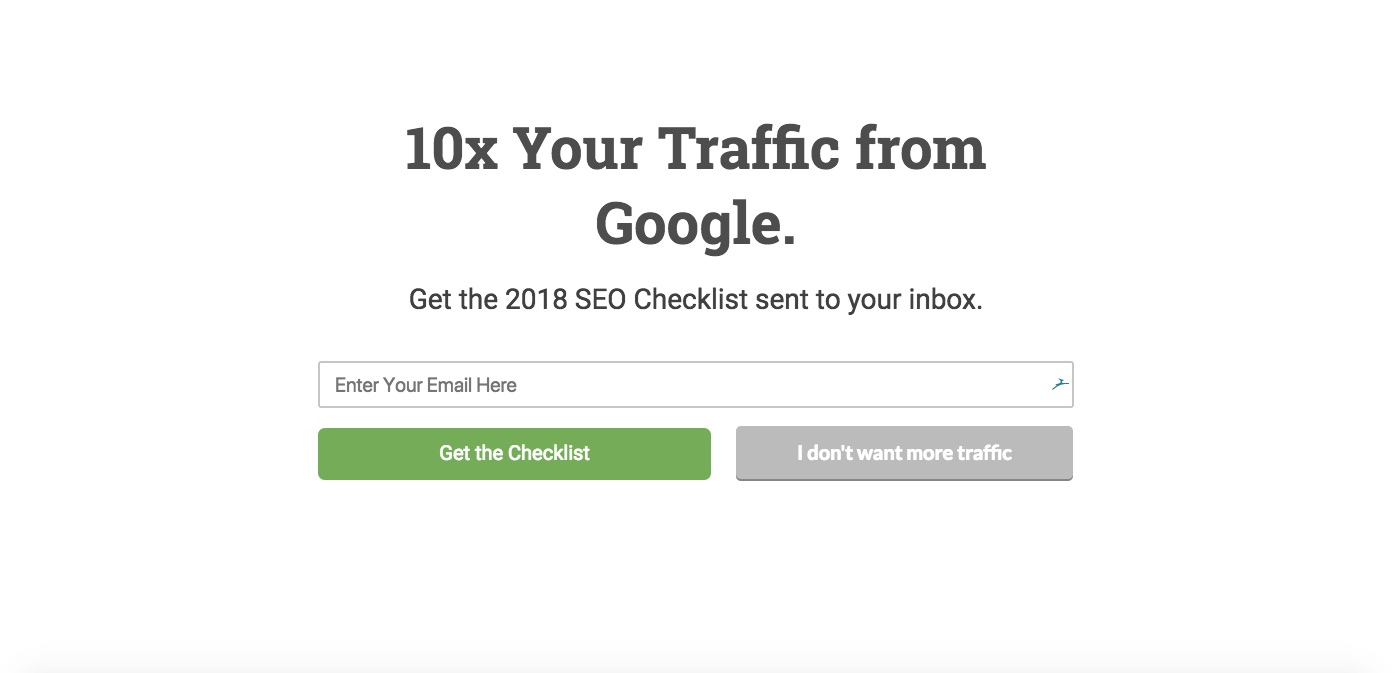
Both Sumo and OptinMonster offer popular options. With them, you can encourage your site visitors to join your email list, check out your latest blog post, download some valuable resource, and more. Much like an exit overlay, they have to actively choose not to do whatever it is you’re asking them to do. Some will. Many won’t.
AppSumo discovered that a welcome mat was 3x more effective for them than any other page or tactic for collecting email addresses.
An optimized and compelling call-to-action strategically placed on your page is your best bet for turning traffic into leads, but it’s not the only way.
Retargeting
Despite your best efforts, there will still be a sizeable chunk of traffic that leaves without completing your CTA. Maybe they were pressed for time, or your offer wasn’t compelling enough, or they simply missed it.
That’s where retargeting comes in. It gives you another kick at the can.
To make use of it, you need to use a service like ReTargeter, Perfect Audience, PixelMe, or AdRoll.
Essentially, a tiny string of code called a pixel is placed on your website. This pixel drops a tracking cookie on the browser of every visitor to your blog. That done, it can follow them around the internet.
It’s a lot less creepy than it sounds.
Ever notice an ad for a product you were looking at on Site A in the sidebar of Site B, or on your Facebook feed? That’s retargeting doing its thing.

The pixel follows them, and displays relevant ads to them to draw them back to your blog or landing page. You get a second chance to convert them.
Wordstream, for example, experienced a 300% increase in engagement and 51% more leads after 18 months of retargeting.
If you’re willing to put some time, money, and effort into retargeting, you will absolutely see an increase in conversions.
There’s a learning curve to it, but most services provide tutorials and how-tos to get you going in no time.
The more chances you give yourself to turn your visitors into leads, the better.
Exclusive or Upgraded Content
Another useful tactic to try is offering exclusive or upgraded content in exchange for contact details.
Either in or at the end of your post, offer some relevant but additional piece of content. It might be a template, or checklist, or blueprint that allows your readers to put what they just learned into action with as little friction as possible.
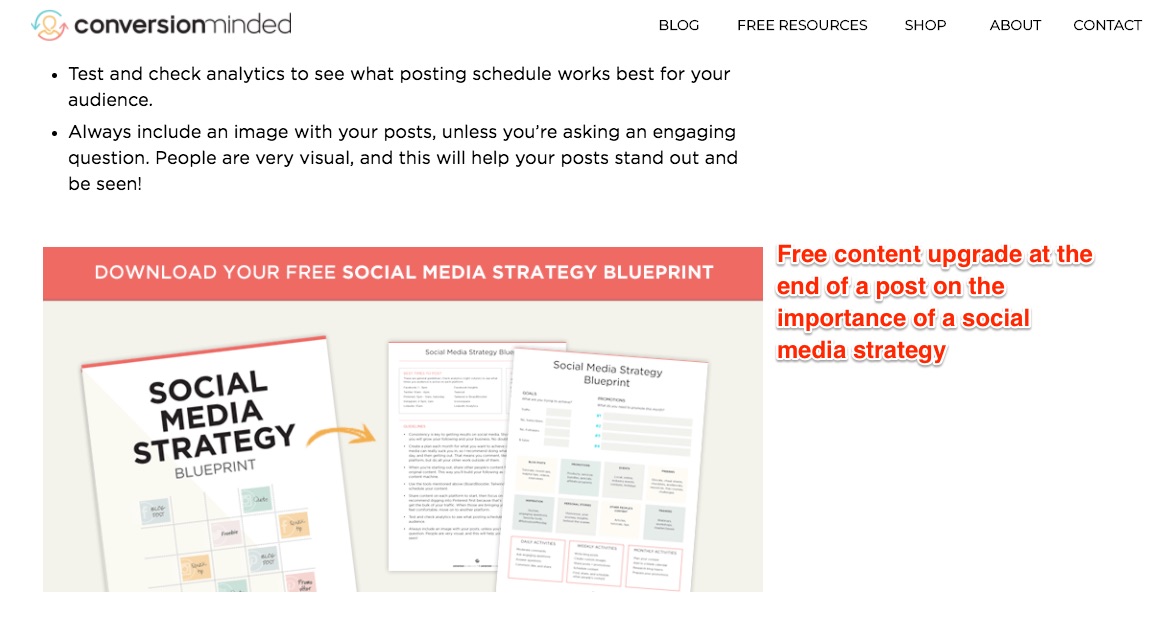
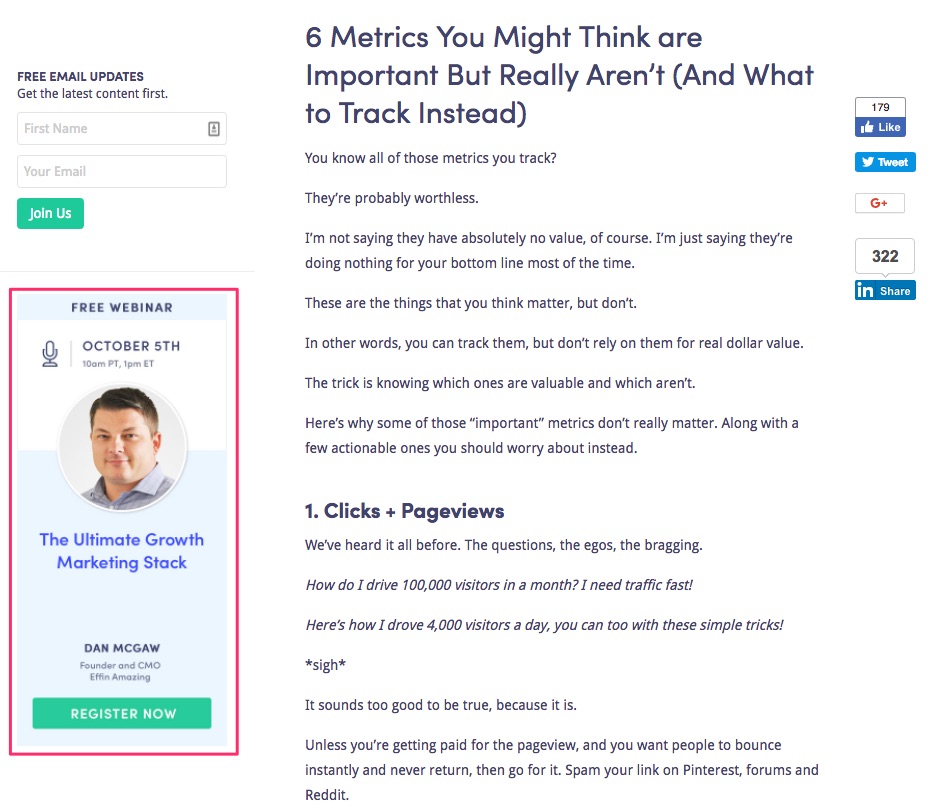
How about a registration box for an upcoming webinar on a relevant skill or strategy?
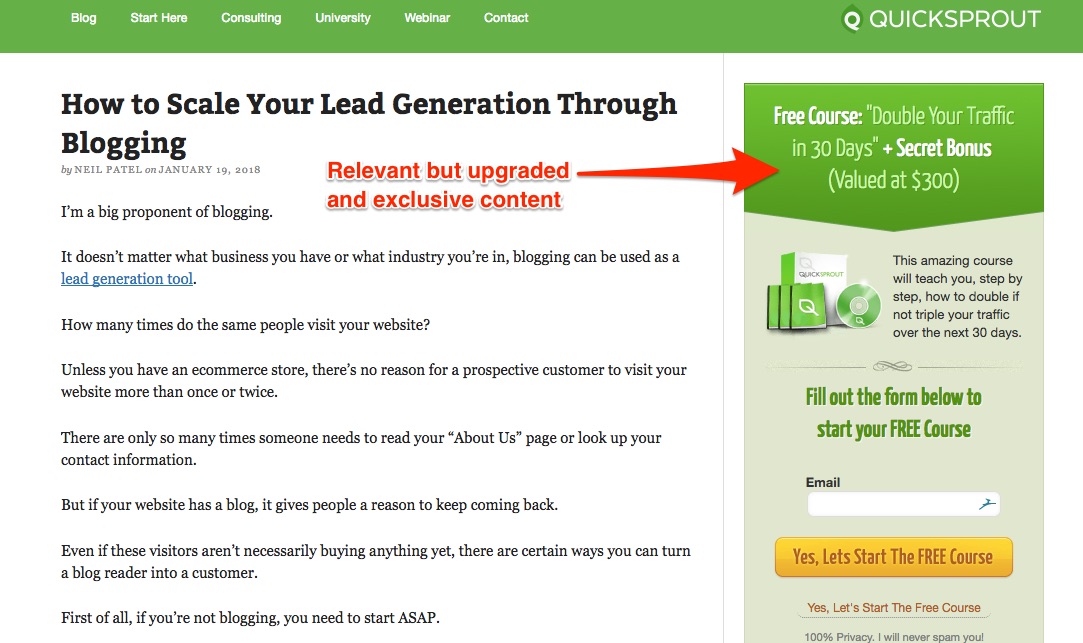
Or a free online course to help readers build complementary skills. A post about lead generation through blogging combined with a sidebar ad for a course on doubling or tripling traffic? That’ll work.
The sky’s the limit on what you can offer. Make it relevant, useful, and irresistible. Ask for nothing but an email address and maybe a name. Make it easy for them to say ‘yes’.
Learn To Be More Persuasive
Ultimately, you’re trying to convince someone to trust you. Most of us are a bit reluctant and cynical when it comes to handing over our details online. You’ve got to persuade and convince them.
To do that, there are few tools as powerful as the six principles of influence as described in Dr. Robert Cialdini’s seminal book Influence: The Psychology of Persuasion. If you’re not familiar with it, I highly recommend it.
Cialdini outlines six basic principles – sometimes called weapons – and you can use them all in your blog posts:
- Reciprocity: we feel obligated to “return the favor” when someone does something for us. If you’re consistently providing your readers with fantastic content and useful tips, they much more likely to give you their email address when you ask for it.
- Commitment and Consistency: if you can get your readers to commit to something small and innocuous – like clicking on a related post – we’re wired to remain consistent in our action. If they’ve committed or agreed to something small like that, they’re very likely to agree to a larger request like their name and contact details later on.
- Social Proof: this hinges on the idea of safety in numbers. If you can demonstrate that the majority already trusts you or uses your product with subscription numbers, social media following, clients or companies you’ve worked with, “as seen on” or “featured in” section, testimonials, and reviews, you’ve got a much easier time convincing new visitors to sign up or purchase.
- Liking: simple. We are more willing to trust or purchase from someone we find agreeable and likable. Be friendly, positive, approachable, helpful, entertaining, relatable, and engaging in all your posts.
- Authority: we inherently trust an authority figure like a teacher, police officer, or doctor. So make yourself an authority in your industry or niche with frequent guest posts on authority sites, speaking at conferences and other events, engaging on social media, answering questions on sites like Quora, displaying your formal credentials and relevant training or experience, and more.
- Scarcity: we want what we can’t have or believe is exclusive. Place a limited period of time or limited number on something, and watch conversions skyrocket. Amazon displays ‘low stock” on items for a reason. But – and this is a big but – don’t overuse this strategy or it quickly loses its power and people feel lied to and manipulated.
While you don’t want to utilize all six in every post you write, strategically using one or two will make you a more persuasive and trustworthy individual.
Quick Tips
Most of the strategies we’ve covered so far are long games. But that doesn’t mean you can’t use a few quick tips to land more leads.
- Promote your products in your posts. You don’t want to overdo it, and avoid aggressive sales tactics, but mentioning a relevant product or resource in the post itself can generate interest and leads. If you’re writing about Facebook Ads, and that’s one of the services you offer, there’s no harm in mentioning that…once.
- Include plenty of internal links to other blog posts, a “related posts” or “you may also like” section, and perhaps ‘previous’ and ‘next’ buttons at the end. Anything you can do to a) further demonstrate your expertise, and b) keep readers on your site will only increase your chance of converting traffic to leads.
- Use plenty of headers, subheaders, and bulleted lists to break up your posts, make them scannable, and keep your readers from bouncing.
- A simple but effective offer at the end is a downloadable summary of the post they just read. If the article is 3500 words, but you can provide them with a convenient, 350 word PDF summary in exchange for their contact details, you’d be surprised how many people will jump at the chance.
And last but not least, consistently provide the best, most valuable, highest quality material you can. There are millions of blogs out there, but the vast majority aren’t worth the digital space they consume. Be different. Be better. People will return again and again if you’re delivering the goods. They’ll recommend you to friends. They’ll sign up, subscribe, download, and purchase.
Try the ideas here, and let me know how it works out for you.
Conclusion
When it’s done right, content marketing can be one of the most effective marketing channels you’ll have. It can reliably bring a steady stream of traffic to your blog and marketing site.
But just like your marketing site converts visitors into customers, your blog needs to convert readers into subscribers. You need to get some information from them while you give out tons of free, actionable content. Often times this means you’ll have to give more free content, but this all part of the transaction. You give a little to get a little.
Anything you’d add to our list? What tactics have you tried to convert your traffic to leads?
About the Author: Neil Patel is the cofounder of Neil Patel Digital.
Flashback Friday: Historical Perspective on Health Care Reforms

This post is part of BIO’s yearlong, bi-weekly series called Flashback Friday, highlighting newsletter stories from BIO’s past. To learn more about BIO’s history and our 25th Anniversary visit our interactive historical timeline.
Reprinted from BIONews, September/October 1993
REFORMING AMERICA’S HEALTH CARE SYSTEM: FIRST ASK THE RIGHT QUESTIONS
By G. Kirk Raab, Chairman, Biotechnology Industry Organization
Soon after this reaches you, President Clinton is scheduled to formally announce his health care reform plan before a joint session of Congress. Rather than predict what he will propose or what the eventual legislative outcome will be, I would like to suggest criteria by which the biotechnology industry should evaluate, the health care reform proposals that emerge from Congress.
Surely the president’s plan will address health care access and financing, and we are likely to see intense controversy on those issues. But the overarching concern for BIG is how the new health care reform plan will affect our mission: bringing to market safe, innovative and cost· effective treatments and cures for significant medical problems.
We must first ask this question: Will health care reform ultimately enhance the quality of care, promote the development of more cures and improve the quality of life?
During the last two decades the biotechnology industry has created important new treatments to fight serious medical conditions. The pipeline of biotechnology products under development promises to provide far more advances in the coming years. In fact, most experts agree that in the next several decades biotechnology will be the single largest contributor to medical progress from within the overall pharmaceutical and healthcare industries. Any health care reform plan that is designed to improve future medical outcomes needs to recognize and support the efforts of the biotechnology industry.
Second, in evaluating health care reform, the industry must ask how decisions will be made regarding the development and use of new technologies. Will doctors or government bureaucrats make these crucial decisions?
Doctors will decide the value of new technologies based on scientific and clinical evaluation. Bureaucratic decision making is more opt to reflect the uncertainties of budgetary and political compromises and thereby stifle investment in innovative research-the lifeblood of our industry.

Finally we must ask: Will incentives for innovation continue to stimulate research and development investment?
Policy makers must be willing to recognize the industry’s massive commitment to ongoing R&D because of the extraordinary opportunities it brings. But they must recognize the level of investment and risk-taking that is being made to realize the new products in human biotechnology that will bring the important clinical advances the medical community and general public won’t.
Last year the biotechnology industry spent $5.9 billion to realize the dream of medical progress. Without continuous and adequate investment capital to pay for this level of R&D expenditure, the industry will be seriously crippled. A negative impact on U.S. productivity, economic growth and competitiveness could follow.
It is crucial that policy makers understand the need to keep the spirit of capitalism alive for the biotechnology industry. Otherwise the free market incentives that stimulated the medical progress of the post will no longer spark that progress, and government restrictions and intrusion into medical decision making will blunt the effectiveness of the world’s most prolific source of medical progress.
Conversely, if we are allowed to do what we do best, our industry will significantly improve quality of life, as well as contribute ultimately to reducing the cost of health care. During this reform process, none of the decision makers should ever lose sight of the fact that as important as economics ore, saving lives and reducing suffering should be a foremost priority of this notion, and that priority should be embraced as passionately by our political leaders as it is by the medical community.
I personally believe President Clinton is well intentioned in his effort to reform health care in this country. But his recommendations and ultimately the reforms that are enacted must be thoughtfully designed so that they will actually achieve those good intentions. The immediate and pressing challenge for the industry as the new health care proposals unfold is to ask the right questions and forthrightly carry the message of our mission to our political leaders.
You can now preorder Apple’s $349 HomePod – CNET

Apple’s first smart speaker finally emerges, well after Amazon’s Echo speakers and the Google Home family dominated the conversation.
[Read More …]
Biotechnology in Action: How Innovation is Having an Impact in Personalized Medicine

Editor’s Note: As part of BIO’s 25th Anniversary celebration we will be spotlighting biotechnology innovations that have made a major impact over the past 25 years. This “Innovation Series” will publish on the 25th of every month throughout 2018. We kick-off this month with personalized medicine.
One size does not fit all when it comes to medicine. Treatments that help some patients fail to help others, and the same medicine may cause side effects in only certain patients. As a result, health systems often deliver inefficient care that fails to help large portions of the patient population – at a notable financial cost as well.
That’s where personalized medicine comes in.
Personalized medicine, sometimes called precision medicine, is an evolving field in which physicians use diagnostic tests, often genetic, that help determine which medical treatments and procedures will work best for each patient. By combining this information with an individual’s medical records, circumstances and values, personalized medicine allows doctors and patients to develop targeted treatment and prevention plans.
Personalized medicine is having a major impact on health care.
For example, one notable personalized medicine, Gleevec, approved in 2001, has transformed the treatment of chronic myeloid leukemia (CML). The American Cancer Society now credits Gleevec and other personalized medicines in large part for a five-year CML survival rate that has more than doubled over the past two decades, from 31 to 68 percent. Called “targeted therapies,” the personalized medicines used to treat CML work by disrupting the function of proteins produced only by diseased cells.
More recently in oncology, the U.S. Food and Drug Administration (FDA) approved a different kind of personalized therapy, called Keytruda, for the treatment of solid tumors anywhere in the body. Keytruda helps the body’s own immune system attack cancer, and was approved for use on any tumor that expresses “microsatellite instability” or “mismatch repair deficiency,” genetic features that make it easier for immune cells to recognize cancerous cells.
Targeted therapies are also helping patients with rare diseases. A landmark study published in The New England Journal of Medicine, for example, suggests that a targeted therapy approved by FDA in 2012 can help reduce some of the most extreme effects of cystic fibrosis by 55 percent, helping patients with this disease live longer, healthier lives.
Some of the most recently approved personalized medicines, called gene therapies, take the science a step further by correcting genetic mutations in human cells. FDA approved the first gene therapies in 2017, for the treatment of acute lymphoblastic leukemia and a genetic form of blindness.
Doctors can also use personalized medicine to help patients avoid the trial-and-error process usually associated with learning whether a treatment option that works for many patients is likely to work for them.
These approaches exemplify how personalized health care can help detect the onset of disease at earlier stages, pre-empt the progression of disease, and, at the same time, make our health system more efficient – and they underline the need for up-to-date public policies and clinical practices that keep pace with the implications of new scientific discoveries.
About Christopher Wells:
 A published expert in public affairs, Christopher Wells has worked with the personalized medicine community for nearly three years to coordinate the communication of the field’s complex principles to diverse audiences. As Vice President of Public Affairs, Wells oversees the development of PMC’s marketing and communications messages and leverages a comprehensive portfolio of digital and traditional communications tools to increase awareness and understanding of personalized medicine in the United States and internationally. He also oversees content development for the Annual Personalized Medicine Conference at Harvard Medical School.
Prior to joining PMC, Wells worked as a research assistant at Binghamton University, where he graduated with a master’s degree in public administration and received the University’s Department of Public Administration Alpha Student Award. He holds a B.A. from the State University of New York at Brockport, where he was honored with Department Scholar’s Awards in both journalism and international studies.
The Value of Academic-Industry Partnerships

More than a decade ago, the NIH Roadmap and the FDA Critical Path Report brought significant public attention and new programmatic efforts to advance sponsored and translational research. These programs act as bridges between the promise of bioscience discoveries and the advancement of new biomedical innovations to improve the lives of patients.
Of particular importance for accelerating translational research and overcoming the challenging environment for bioscience innovation is advancing collaborations between industry and academia, as a means to both improving R&D productivity and reducing the costs of translating discoveries into new medical products.
That call for greater industry-academia partnerships reflects the unique nature of bioscience innovation when compared to other industrial sectors. For instance, not only is there a greater commitment by the bioscience industry to conduct internal R&D, there is also existing close ties between industry, clinical care, and academic communities due to the necessary interface of “bench and bedside” required for biomedical innovation to move forward.
Two recent BIO reports affirms the stakeholder dynamics including a review of the economic impact of licensing of academic research to industry and a report on ways in the states that the biotech industry and academic research communities are crossing new frontiers of innovation.
A study released in June 2017 by BIO provided data on the importance of university/industry research and development partnerships to the U.S. economy. The study of university technology licensing from 1996 to 2007 shows a $187 billion dollar positive impact on the U.S. Gross National Product (GNP) and a $457 billion addition to gross industrial output, using very conservative models.
Before the passage of the Bayh-Dole Act in1980, inventions arising from the billions of taxpayer dollars invested annually in university research remained largely on laboratory shelves and were rarely commercialized because of restrictive patenting and licensing practices. This situation changed with passage of the Bayh-Dole Act, which allows university inventors to patent their discoveries and license them to commercial partners with maximum flexibility and limited federal bureaucracy. As a result, the biotech revolution was born, turning inventions into products that are improving public health, cleaning our environment, and feeding the world.
Other key findings of the study include:
- University-licensed products commercialized by industry created at least 279,000 new jobs across the U.S. during the 12-year period;
- The annual change in U.S. GDP due to university-licensed products grew each year, illustrating that the impact of university patent licensing grows even more important each year.
- The study was funded by BIO and the Association of University Technology Managers (AUTM) and headed by Dr. David Roessner, Professor of Public Policy Emeritus at the Georgia Institute of Technology.
Sponsored Research Engagement: Academic and Industry Principles
A second BIO national report entitled Biotechnology-Research Engagement Opportunities: Eight Guiding Principles affirms that when biotechnology companies and universities work in tandem to push the frontiers of biotechnology based knowledge, they become a powerful engine for innovation and economic growth.
According to authors Peter M. Pellerito and Austin M. Donohue, academic and industry partnerships that work well have created strategic view of the value of R&D and commercialization merge the discovery-driven culture of the university with the innovation-driven environment of the biotechnology company.
But to make the chemistry work, each side must overcome the cultural and communication divide that can impair biotech industry-university partnerships and undercut their potential.
Principles
Guiding Principle # 1: Successful university-industry collaborations reflect an understanding of the mission and culture of each partner:
Successful sponsored research transactions require all parties – industry and academia – to identify the core mission of their organizations early in the process and defining the scope and focus of the proposed alliance.
Guiding Principle #2: Alliance management resources are essential:
Industry and university participants engaging in strong alliance management strategies devote resources, energy and attention to maintaining relationships and working together in an ongoing effort to facilitate productive, transparent outcomes to ensure sponsored research success.
Guiding Principle #3: Universities and industry participants should understand the objectives and benefits to each party that will result from collaborations:
Goals, objectives, and timelines for completion are essential for productive end results in partnerships; each party must understand and support the objectives and proposed research benefits of the other party.
Guiding Principle #4: Commitments in sponsored research agreements should ensure legal integrity and consistency:
Commitments contained in sponsored research agreements concerning future research results shall be consistent with all applicable laws and regulations and with any contractual obligations the University or biotechnology company may owe to others.
Guiding Principle #5: Parties should have a clear focus on each other’s licensing strategies:
Both industry and academia must commit to engaging in open and honest discussions to develop creative and effective licensing strategies that promote global access to innovation. The mutual goal should be an authentic partnership where each party understands the collaboration goals and objective of the other party and is committed to each party achieving success.
Guiding Principle #6: Parties should focus on streamlining negotiation protocols:
Universities and biotechnology industry should focus on the benefits to each party that will result from collaborations by streamlining negotiations to ensure timely conduct of the research and the development of the research findings.
Guiding Principle #7: Negotiator training is essential:
In order to effectively navigate towards an overall success rate for the institution, all sponsored research officers, contract negotiators and licensing officers, and especially those early in their careers, must understand how each research collaboration with which they are engaged reflects forces in the larger world of biotechnology development.
Guiding Principle #8: Partnerships should work to lower the cost of transactional efforts:
Systematically reducing transactional costs should be a major combined effort of both the university and biotechnology industry sector. This includes broader efforts to engage interpersonally through these partnerships in order to lower communication barriers among participants.
From these two reports it is clear that as academic research institutions move in new and innovative multi-partner efforts, there is a new energy and focus in working to bring novel research into the public space and utilize the biotechnology industry continues to be a growing partner.
Puma Biotechnology sinks after Europe unlikely to OK breast cancer drug
Jan 23 (Reuters) – Puma Biotechnology Inc said on Tuesday a European regulatory panel indicated it was unlikely to provide a positive opinion on the company’s breast cancer drug, sending its shares down 30 percent. The setback comes six months after the U.S. Food and Drug Administration …
Combating Antimicrobial Resistance

Here’s a statistic you might not have known: an estimated 700,000 people die each year due to the growing number of infections resistant to treatment. Known as antimicrobial resistance (AMR), this “silent killer” and looming public health threat has severe social and economic consequences that could have a lasting impact on families, individuals and communities across the globe.
Writing for Life Science Leader, Thomas Cueni, Director General of the International Federation of Pharmaceutical Manufacturers & Associations (IFPMA) points out that while the United Nations and the World Health Organization recognize AMR as serious concern, it is not as visible as other epidemics, which explains why the general public is often unaware of the issue at hand.
“AMR does not have the recognizable “face” of disaster. It is not a train crash, an ecological disaster, or a disease epidemic such as Ebola or Zika scaring all of us. It is more of a silent killer,” Cueni notes.
“People only fully realize its consequences when they or a member of their family suffer from a bacterial infection which proves resistant to treatment. From a health community perspective, AMR has crept up on us over a period of time where we perhaps complacently believed we had effectively dealt with any number of established diseases and could now save our attention for a few new ones.”
And from a dollars and cents point-of-view, AMR could have a crippling effect on the global economy and in local communities who might not have the means to combat such an epidemic. As Cueni explains:
“The economic impact of AMR is huge – estimates are of $100 trillion lower GDP on a global level. Given these figures, it is actually quite astounding that the emerging consensus on the need for sustainable pull incentives to encourage long-term investment in AMR R&D has not moved from talk to action. Progress on this front is urgent. There is need for open-minded conversations amongst all of the key stakeholders, including international organizations, governments, the public health community, civic society, and the private sector.”
The global biopharmaceutical industry is committed to doing our part to tackle this serious issue. The AMR Industry Alliance – a cross-sector coalition of 101 companies from across the industry – was formed to fight and overcome antimicrobial resistance. Members including biotech, diagnostics, generics and research-based pharmaceutical companies and associations have committed to sharing information and jointly reporting on four key areas: R&D, appropriate use, access to treatment, and reducing the impact of manufacturing on the environment. And findings from their first progress report shows that they are doing just that:
- In 2016, 22 Alliance members invested at least $2 billion in R&D to counter AMR;
- Approximately 250 biotechnology companies across the globe are investing in innovative R&D approaches – both antibiotic and non-antibiotic – and are focused on developing powerful drugs and novel tactics to fight against AMR;
- More than two out of three Alliance companies surveyed with marketed AMR products, have strategies, policies or plans in place to improve access to their AMR-relevant products; and
- The Alliance is appealing to policy makers to draw from the evidence provided in this report and invites stakeholders to work more systematically with the life sciences industry, to find sustainable solutions to tackling antimicrobial resistance.
To read the full op-ed, click here.
To learn more about the AMR Industry Alliance, click here.