Housed in the ‘agri-food cluster’ in Mohali’s Sector 81, the National Agri-Food Biotechnology Institute (NABI) is the first-of-its-kind institute in the country. Though established in 2010, NABI moved TO its own sprawling campus in March 2017. In fact, the cylindrical entrance to the building has made it quite …
Normal Type
We are Normal Type
Biotech in Toronto
Do any fellow Canadians have advice on companies and people to get connected with in the Toronto biotech space? I am a biochemistry PhD student aspiring to start a company. 🙂
submitted by /u/thestrangescientist
[link] [comments]
Facebook, Attempting to Woo Back Users, Has Turned Into an Unbearable Nag
Nonstop emails pester infrequent users into returning to the troubled social network.
How to Become an Influencer in Your Industry
Influencer marketing has skyrocketed since it first made its mark.
That’s very much due to the way purchasing decisions have changed over the years. You might recall, for example, a story about how many women no longer trust celebrity endorsements. That’s because most consumers, research shows, seek product and service recommendations from those who are, above all, knowledgeable and credible.
And today, those qualities often come in the form of social media influencers.
When it comes to getting advice or recommendations on what to do — which product to buy, which movie to see, and where to travel on vacation — there are still areas where we trust our peers more than we do “experts.”
But that’s part of what makes an influencer so powerful: Despite perhaps being an expert in his or her field, by sharing content and insight in a certain way, consumers view that person more as a peer. We have things like constant access to video and other visual content to thank for that — the tools that help us “get to know” people online in ways that weren’t quite as accessible only a few years ago.
So, how can you tap into this area, and become an influencer in your own field?
What Is an Influencer?
Influencers are ordinary people who have earned a substantial loyal following because of their expertise and transparency. Unlike celebrities actively endorse products on their social media accounts, influencers achieved their fame because of the valuable information they share with their followers.
It’s for this reason why one of the influencer marketing trends experts anticipate in 2018 is the increase in demand for social media influencers, specifically micro-influencers (influencers with less than 100K followers). Not surprising, more and more people want to become social media influencers.
The question is: where do you start?
In this blog post, I’ll be laying out ten ways how to become a social media influencer. On their own, they will help you slowly make your mark and establish you as an influencer in your industry. But do all these together, and you have a powerful strategy that will help speed things up exponentially.
How to Become an Influencer in 10 Steps
- Find your niche.
- Use the “First Principles Thinking” approach.
- Choose your social media channel.
- Develop your content strategy.
- Distribute your content.
- Grow your network.
- Engage with your followers.
- Evaluate your progress.
- Stay updated.
- Be consistent.
1. Find your niche.
If you want to become a social media influencer, the very first thing you need to do is to choose a specific niche where you want to be known.
Although most social media influencers start out posting content, they’re passionate about, what sets them apart is the fact that they tend to focus on a particular niche within the industry they’re passionate about.
To find your little corner of influence, you’ll need first to determine who is your target audience by developing a unique persona-a semi-fictional representation of your ideal reader. Tools like HubSpot’s Buyer Persona Generation Tool can help you identify the individual wants, needs, challenges, and goals of your ideal reader that you can help solve and address, pointing you to the right niche to establish yourself and grow as an influencer.
2. Use the “First Principles Thinking” approach.
In an interview with Kevin Rose, Elon Musk explained that there are two reasoning approaches people use. The first and most common is the analogy approach. People that use this reasoning method decide to do things based on what has happened in the past.
That’s why we often see many people in a particular industry doing nearly the same thing, talking about the same topics, and even using similar formats when it comes to publishing and promoting their content.
The second reasoning approach is what Musk refers to as the First Principles Thinking approach. Instead of basing decisions on past successes or failures, Musk and others that use this reasoning approach study objective fundamentals and make their decisions based solely on that.
What’s good about following Musk’s way of thinking and reasoning is that it opens you up to other possibilities and approaches by “forcing” you to disregard the status quo, and think differently. Doing that can help set yourself apart from other influencers in your niche, and allow you to bring something new and fresh to the table for your target audience.
3. Choose your social media channel.
Instagram is the channel where 93% of social media influencers focus their content — because it gives them the best results.

Source: Marketing Profs
However, just because those are the current statistics doesn’t mean that Instagram is a perfect choice all the time.
The reason is simple: Your ideal audience may not be spending most of their time here.
If you want to quickly grow your following and establish yourself as a social media influencer, you need to make sure that you choose the right social media channel based on your niche and ideal audience.
Here are three questions to ask to help guide you in choosing the right social media channel:
Who is your target audience?
Again, this is where creating a holistic persona of your ideal audience is crucial. Instagram and Pinterest are excellent choices if you’re aspiring to reach out to millennials. On the other hand, if your target audience consists mostly of business executives, LinkedIn may be your best bet.
Where are the other influencers in your niche?
Aside from sharing the same target audience, being active in social media channels where the big influencers in your niche open the door for you to reach out to them, and even collaborate with them in the future.
One tool I found extremely useful for this is BuzzSumo. When you do a search here using your targeted keyword, you’ll not only see what topics other influencers have tackled, but where they also share these pieces of content.

This is extremely valuable — it points you to the social media channel where the content is shared the most, making these ideal places to reach out and grow your following.
What type of content will you create?
Some social media channels like Facebook and LinkedIn allow you to post a diverse range of content formats while others like YouTube and Instagram only focus on providing users a specific content format.
That said, it’s vital that you select the social media channel that best suit the content strategy you’ll develop, which we will look into in the next section.
Regardless of which social media channel(s) you choose, remember not to go overboard with your selection. Stick to using two to three networks. Otherwise, you’ll be spreading yourself too thin, and will find it difficult to build your credibility and following.
4. Develop your content strategy.
Just like in inbound marketing, the format and quality of the content you publish will make or break your chances of successfully building yourself as a social media influencer.
Decide on the format you’ll use when creating your content. It should be one through which you’re able not only to deliver valuable information, but also, express your personality and voice — which help add uniqueness to the content you produce for your target audience.
Part of developing an effective content strategy is giving your audience the right balance of informative content and personal content. Remember, one reason why people trust influencers is due to their relatability.
One efficient way to do this is through the 5-3-2 principle: Out of every 10 posts you publish in your social media account, five of these should be valuable content written by someone else, three are educational and informative content you created yourself, and two should be posts about yourself.
Now, you may be thinking, “How will this help me become an influencer if half of the content I’ll be publishing is curated content?”
For starters, influencers are known for being able to provide valuable content to their audience. That includes sharing content written by others that they believe their followers will find useful.
More important, sharing content published by other influencers in your niche will help you slowly get their attention. As a result, it will be much easier to reach out to them and ask them to do the same for you later on.
If you need help discovering topic ideas for your content, try these resources.
Google Related Search Keywords
This is found at the bottom of the page after you search on Google. It lists down the most frequently used long-tail keywords used by your target audience when searching for content on the internet.

Answer the Public
Answer the Public is a website that gives you a comprehensive list of the different questions that are commonly asked around your chosen keywords, which you can then answer through your content.
Quora
Similar to Answer the Public, Quora gives you a list of different questions asked surrounding your selected keyword. The main difference between the two is that unlike Answer the Public, which offers you a list of questions based on search algorithms, the questions you find in Quora are those that were left explicitly by individuals currently facing a problem or challenge.
At the same time, Quora allows its members to leave answers to these posted questions. This gives aspiring social media influencers the chance to flex their muscles, and showcase knowledge on this topic — and, eventually, your niche.
5. Distribute your content.
No matter how great your content is, if you’re not getting people to see it and engage with it, it’s not exactly useful.
That said, it’s important that you carefully plan out when you’ll be publishing and distributing your content on social media.
The best time to post content on social media hugely depends on which social media channel you chose to use. This infographic provides a detailed breakdown of the best days and times when to distribute content for each of the most popular social media networks.
It’s just as critical to know how to post your content on social media. While each social media channel has its own rules and guidelines, here are some general best practices that are applicable regardless on which social media channel you use.
Stick to one theme per social media channel.
Focusing on one specific theme for each of your social media channels allows you to give your followers a more holistic picture of who you are, what you do, and what you stand for. That way, you’re able to publish more diverse content while still keeping your profiles very sleek and cohesive.
More important, it helps you categorize the different types of content you publish. That way, your followers know which social media channel they’ll find the content they need from you.
Customize your message.
Even if you’re posting the same piece of content on different social media channels, always take the time to make sure that you customize the message you include in it. Not only does it make each of your posts more personalized, but as Aaron Haynes, founder of Fenix Pro points out, it prevents your followers from feeling like their being spammed on their social media feeds.
“You need to make sure that you tailor every single content you post caters to the wants and needs of your followers, whether it’s a regular post or a paid post,” he explains. “The worst thing is that they can report your account as spammy, which could mean the end of your social media influencer dream.”
Optimize posts for mobile.
The average person spends over three hours on his or her mobile device.

Source: eMarketer
And within that time, 80% of it is spent on social media. That said, make sure that the posts you publish are just as appealing in mobile as they would be when viewed on desktops or laptops.
6. Grow your network.
While you’re still in the process of establishing your credibility and expertise as a social media influencer, you’ll need to actively grow your follower base.
One of the most effective ways of doing this is through blogging. Even though more Internet users are turning to social media networks for information, the fact remains that you don’t entirely own your space here. One misstep can easily cause these social media networks to take down your account, causing you to lose all of your content and followers.
Blogging can help you kickstart your follower base by helping you get discovered. By including social media sharing buttons on each of your blog posts, your visitors can share your content with their respective social media networks.
If you have the budget, and you have a premium content offer on your blog, Justin Morgan — a.k.a., the Dental Marketing Guy –recommends promoting it as a sponsored post. That way, your content can find its way onto the feeds of those that match your ideal persona, introducing yourself and what you have to offer to them.
Blogging is also an efficient way to reach out and connect with is influencers in your niche as well as those related to yours. Blogging was how I connected with key influencers in my niche and exponentially grew my follower base.
Creating guest posts is another way of growing your followers. Getting featured on a reputable site within your niche helps you further establish your credibility and authority. At the same time, it will help you capture the attention of the more prominent influencers in your niche, and even open the door for collaboration with them.
7. Engage with your followers.
When your followers leave a question or comment on your posts, take the time to acknowledge and respond to them. That can make them feel like they’re valued and that you sincerely want to help them. It will also help you develop a relationship with them.
Of course, not all of the comments and questions will be positive. As an influencer, expect that you’ll have your fair share of negative comments and criticisms. Make it a point to keep your cool and address them professionally.
8. Evaluate your progress.
This step is crucial, especially if you’re looking to collaborate with brands for their influencer marketing campaigns, since this is one of the things that brands look for in an influencer to partner with.
Most social media channels give you insights and analytics to monitor your progress — things like demographics, reach, and engagement rate, that will show how quickly (or slowly) you’re building your audience. It will also shed light on which content formats get the highest engagement rates, so that you can create more of these.
9. Stay updated.
If you’ve been active on any social media channel, you know how often networks update their algorithms, as well as their posting terms and conditions. As an aspiring influencer, you need to keep yourself updated with these changes to avoid penalizations.
You’ll also need to familiarize yourself with FTC guidelines and policies, especially if you’re going to be collaborating with brands to promote their products and services on your social media accounts.
With influencer marketing proving itself as a highly effective marketing strategy, the FTC has become even more vigilant in monitoring brands and partner influencers that might be violating marketing guidelines.
10. Be consistent.
According to Adam Steele, founder of Loganix, if there’s one thing that surpasses quality content, it’s consistency.
That’s because your followers need to be able to count on you to deliver quality content on a consistent basis. If you don’t, they’ll eventually stop following you, or at least paying attention to you.
Scheduling your posts using a social automation tool like eClincher or HubSpot’s social publishing tools can help ensure that you stay consistent with your posts. Instead of manually publishing on each of your social media profiles, these tool allow you to create, upload, and schedule posts in batches.
Positioning yourself as a social media influencer will take some time, so you’ll need to be patient with the process, and stay consistent with it.
Most important, understand that becoming a social media influencer in your industry is not the end destination. Instead, it’s a stepping stone to more significant opportunities and responsibilities.

No-Touch CRO: 11 Ways to Optimize Your Website Without Touching Your Website
Wait a minute, no-touch website optimization? How on earth can you optimize your website without touching it? That’s absurd. Insane even. Have you gone stark raving mad, Oli?
Who me? Never! Or at least, not all the way crazy. I’m talking about ways that you can experiment, learn, and change behavior simply by using page and UI elements like Popups and Sticky Bars. An approach I call no-touch CRO (conversion optimization).
What is No-Touch CRO?
Kinda like the title suggests, no-touch CRO is about uncovering, exploiting, and maximizing the conversion opportunities that exist on your website. It’s all about velocity, getting results, and learning quickly and easily so you can make informed updates and optimizations to your website backed by data.
Here’s how it works in a nutshell. You install the Unbounce script on your site once, and then you have access to creating experiences on every page, without touching any code or design on the site.
Think of it as a layer of abstraction that exists above your site. Like literally.
“Are you doing that product awareness thing again, Oli?” Yup. I most definitely am. But only because I think the 11 ideas below are badass, and it’s how I like to work.
(Skip to the 11 website optimization ideas).
Navigating the Politics of Website Optimization
The reason I like this approach is because the politics of website development, design, and optimization are a complicated and slow-moving pain in everyone’s ass. The number of stakeholders, sign-offs, reviews, and revisions that are necessary to get a change implemented are always underestimated. Not to mention budgets, different departmental priorities and needs, and of course time. It’s basically a giant cluster that needs to be navigated proactively.
Which is why, if you can come to the table with some evidence that your ideas can affect positive change, those same naysaying stakeholders will become advocates for your work.
Now, I’m not suggesting the first thing you do is to start hammering your pricing page visitors with popups. You have to be smarter than that. Starting small, on low-traffic pages, and using techniques that are legitimately useful for your visitors, and provide as much evidence and learning as possible. The more successes you can show, the greater the bounds of your website optimization freedom will be in the future.
I’m going to share 11 ideas for you to get started with no-touch website optimization using popups and sticky bars, but first, you need to get your web developer to install the script on the website.
Your developer may have some questions such as: How big is the script? Which pages does it need to be added to? We interviewed two of our web developers at Unbounce to understand these concerns, and it was enlightening to hear about their process, and what they check when considering adding another script to the site.
We found that it’s typically a 1-2 day turnaround to get a new script installed, based on the research they need to do regarding page speed and bug testing etc. But one of the most interesting parts to me was simply the desire for the web developer to be included in the process. They didn’t want marketers installing it on the site themselves because it’s a serious concern that needs to be handled properly.
A big positive insight was that the amount of features available in the Unbounce platform (for triggers, targeting, and timing) allows significantly more functionality, interaction, and marketing campaign content without any requests of the developer’s time – making it a big win-win overall.
Just make sure you involve your developers.
If you have Google Tag Manager set up on your site, it’s even easier to get the Unbounce script added. Send this post about adding the Unbounce script using GTM to your web developer now.
11 No-Touch Conversion Optimization Opportunities You Can Take Advantage of on Your Website
Alright! Time to start optimizing your website without touching your website. Here are eleven creative ways to increase the number of conversions, and insights you get from your website.
#1: What on earth are you clicking on?
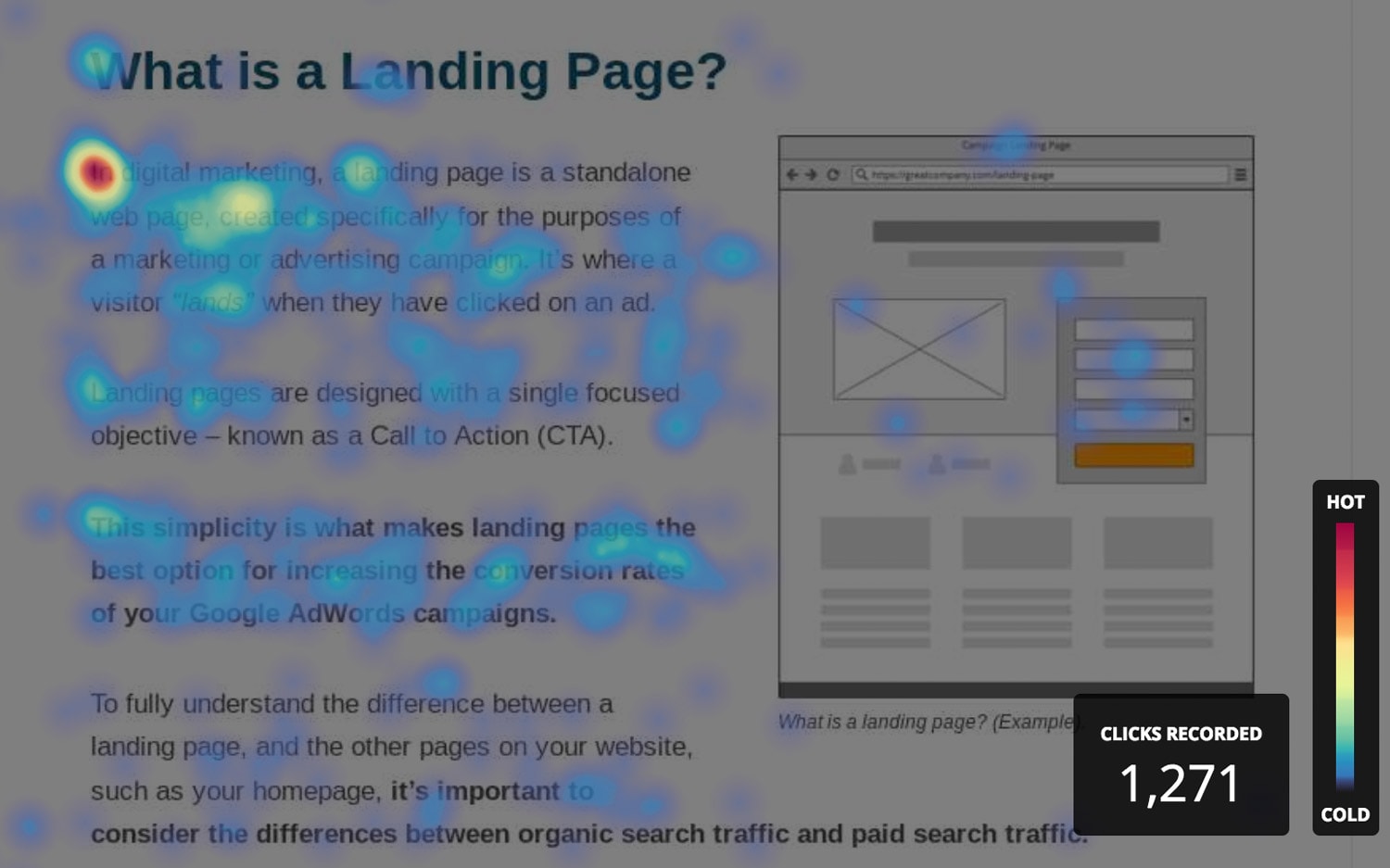
If you are a frequent observer of heat maps you’ll have no doubt seen big splotches where many people are clicking a page element (word, image etc.) when the element isn’t even clickable.
There can be several reasons for this:
- It’s just what people do when they read
- They are expecting something to happen
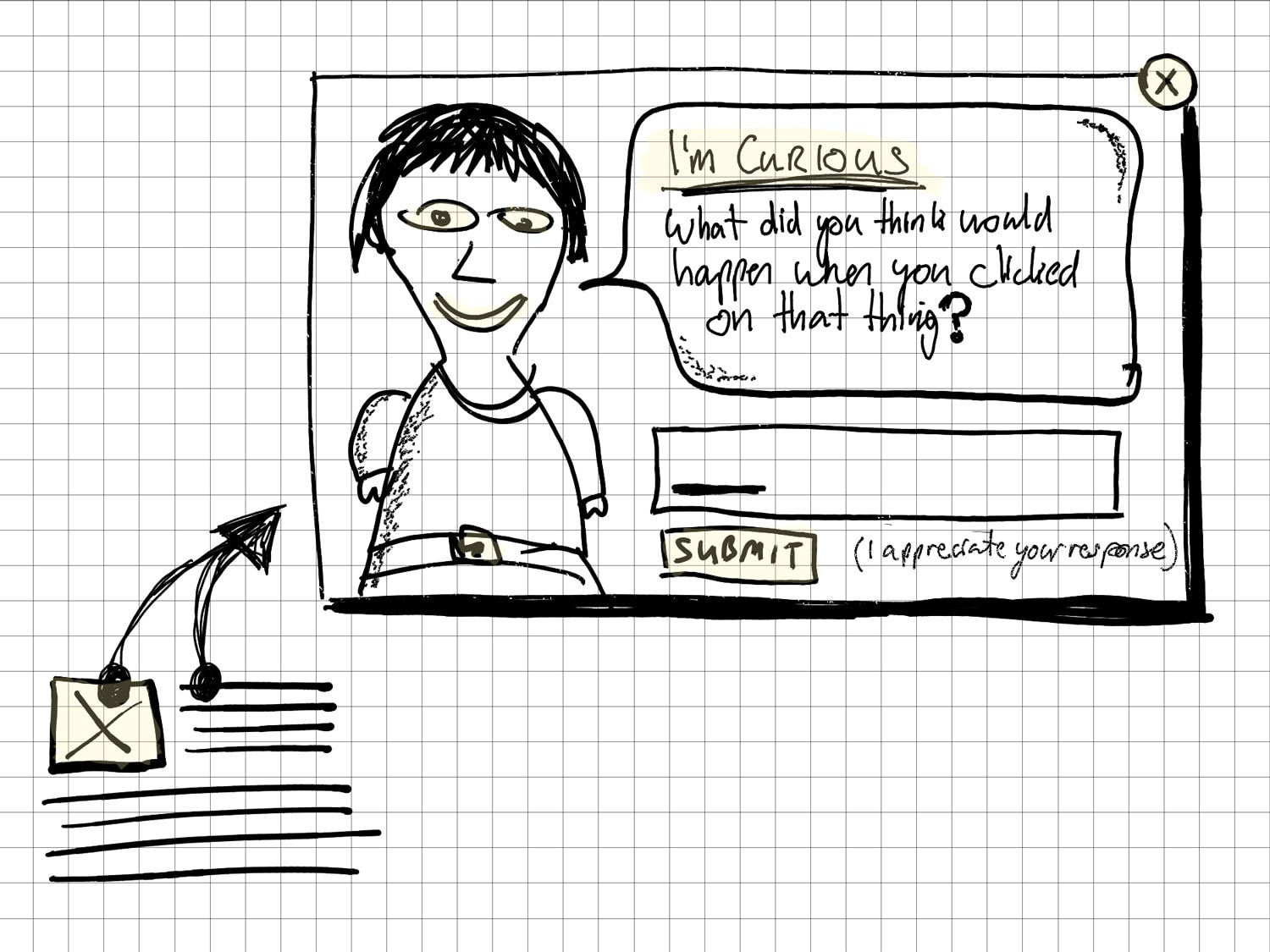
In the case of option B, there’s an opportunity to learn why they are exhibiting this behavior and ask them what they expected to happen.
You can do this by using the click trigger to launch a popup with a simple open-ended question such as “What did you expect to happen when you clicked that?” or “What are you looking for?”.
Conversion Implications
The responses from these research questions could inform you as to a missing part of the experience which you can then consider adding to the website, either directly, or after an A/B test of some kind.
An Unbounce Example
When I was researching behavior on our “What is a Landing Page?” page, I noticed interesting behavior on the first paragraph, where the first word was really strongly highlighted. I had two theories about this:
- It’s just a thing people do when they start reading.
- People were clicking on the first word and then dragging their mouse to the end of the first or second paragraph to copy the text. Because the page is a very well written and simple definition of what a landing page is, I hypothesized that people doing research who needed a definition to include in their content were copying the definition.
To confirm this I watched some session recordings and observed someone doing this. I also searched Google for my newly written definition and found over twenty sites had done exactly that. Inbound links FTW.
#2: Create a Custom 404
Wouldn’t you like to know what people are thinking when they’re on your 404 page? If you dig into your analytics you’ll be able to figure out where they came from, but where should they go next?
By using a popup on your 404, you can take advantage of several conversion opportunities:
Option A: Research & Redirect
If you can establish where people are coming from (in order words, where the broken link is), you can use the referrer URL targeting in Unbounce to create a custom experience for them.
If the broken link is on your own site, you can get that fixed, or a 301 redirect put in place to a relevant page and if the broken link is on someone else’s site you can reach out to them for an update.
However, both of those options take time and resources to accomplish. You should put them in motion regardless, but in the meantime, there’s plenty you can do to learn and optimize.
This is a great place to experiment with a Choose Your Own Adventure (CYOA) experience to see what the preferred next step is. If you can show a pattern of next step desire here you’re ready to make a more permanent 301 redirect to the popular choice.
An open-ended question like “What were you looking for?” coupled with a few large buttons that redirect people to some of your critical path conversion pages.

Option B: Replace
Something you might not know is that if you use the Unbounce WordPress plugin for your landing pages, there’s a way to replace a broken link with a landing page.
When using the WordPress plugin, any URL you set up on your domain in Unbounce will assume dominance over an existing page. Now you most likely don’t want to do this with a legit page that’s working. But for a broken link you could publish a landing page using the very same URL to present an experience that you are in full control of – no developers required.
Warning! Don’t simply go overriding pages all over your website (unless you own it fully). Let your web and marketing coworkers know what you’re doing.
#3: The Login Hijack
I introduced The Login Hijack in my 5 Legitimately Cool Use Cases for Website Popups You’ve Never Considered post. The concept is to create an experience based on the information that you (probably) have a large % of visitors (customers in this case) only showing up to click the login link.
Note: You need to drop a cookie on your login page to identify customers, then you can use the cookie targeting in Unbounce to show the popup when they return next time.
This is a perfect place to insert some product marketing content. Here are two ideas:
Idea #1
Run a “did you know?” survey to measure new feature awareness. This could take the form of a series of large buttons with product or feature names on them, and a request to “Click all of the features you were not aware of.” The heatmap on this could be fascinating. Don’t forget to also include a login link so customers don’t have to click to close the popup before proceeding.
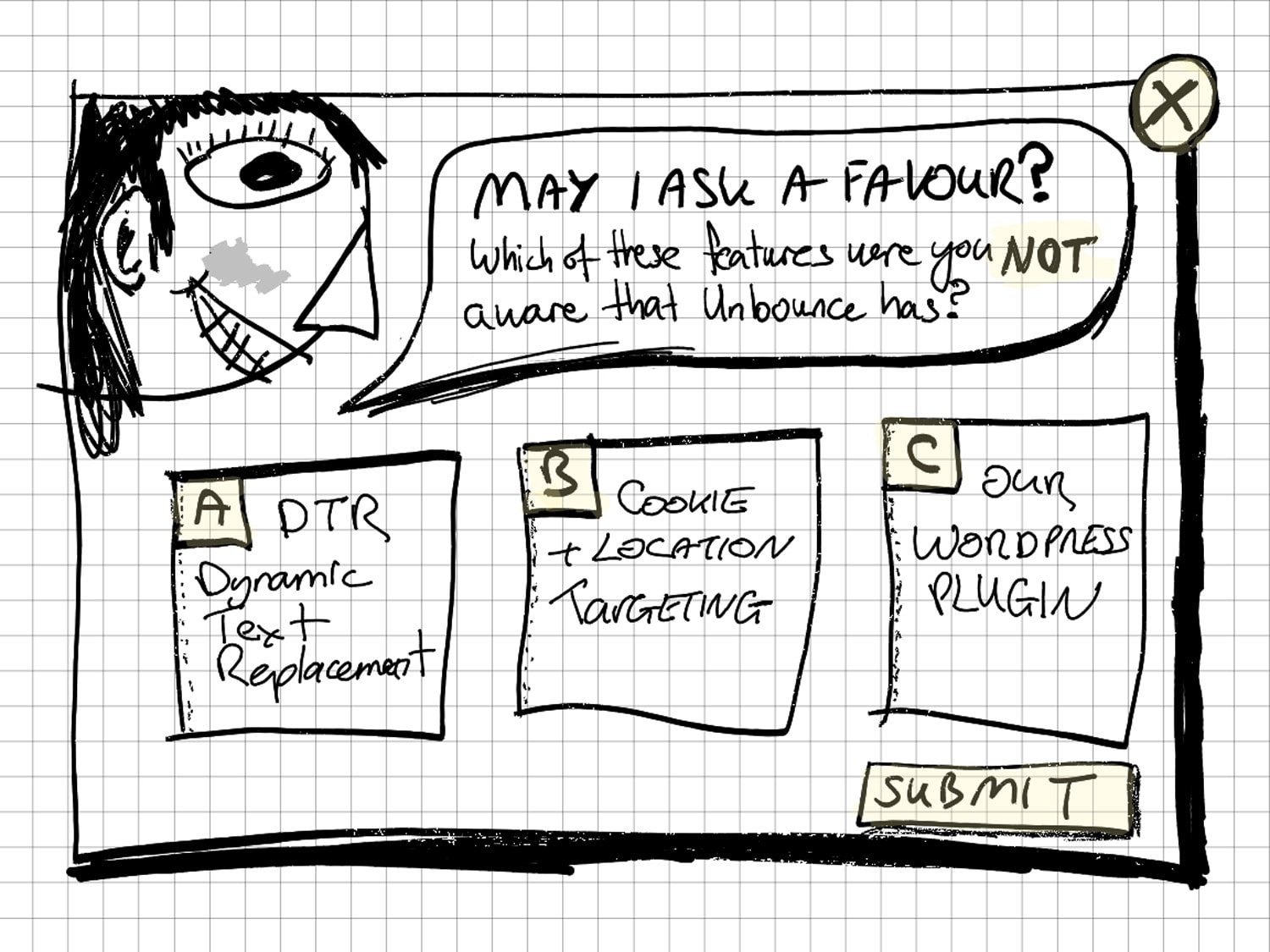
You could also include a login redirect after the question is answered to prevent the need for an extra click.
Idea #2
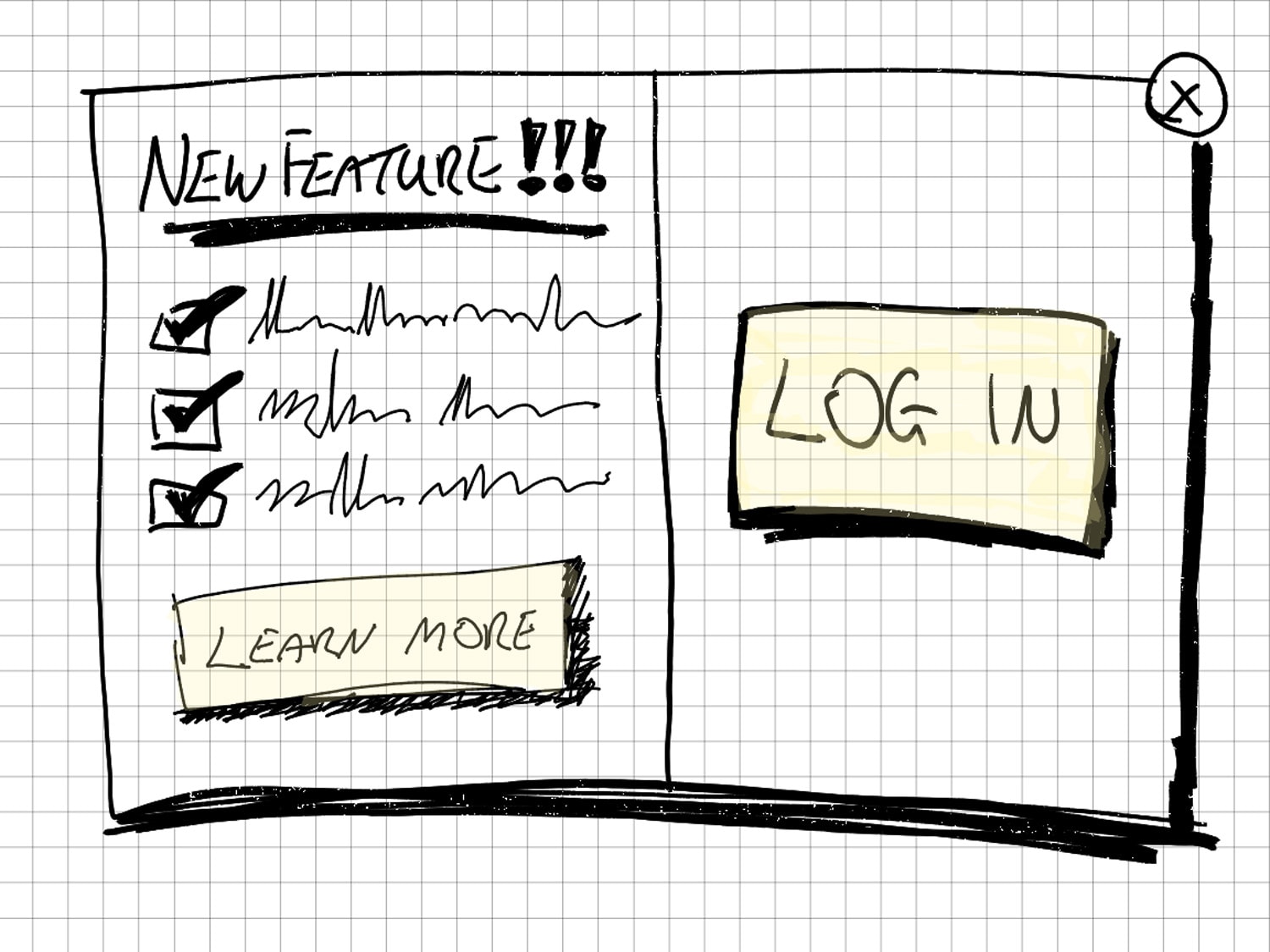
Present a popup with a 50-50 vertical split. The left side can present information about a new product or feature with a “Learn More” button, and the right half can provide a large login button. Not only does this allow you to get product messaging in front of your customers, it also makes the login link/button bigger that it would have been.
#4: Advanced Video Interactions
If you have any videos on your website you probably have a call to action at the end. This is great. Until you look at the engagement data and realize that 50% of people never get to the end.
You can get around this problem with a very cool interaction model that Unbounce Noah Matsell built.
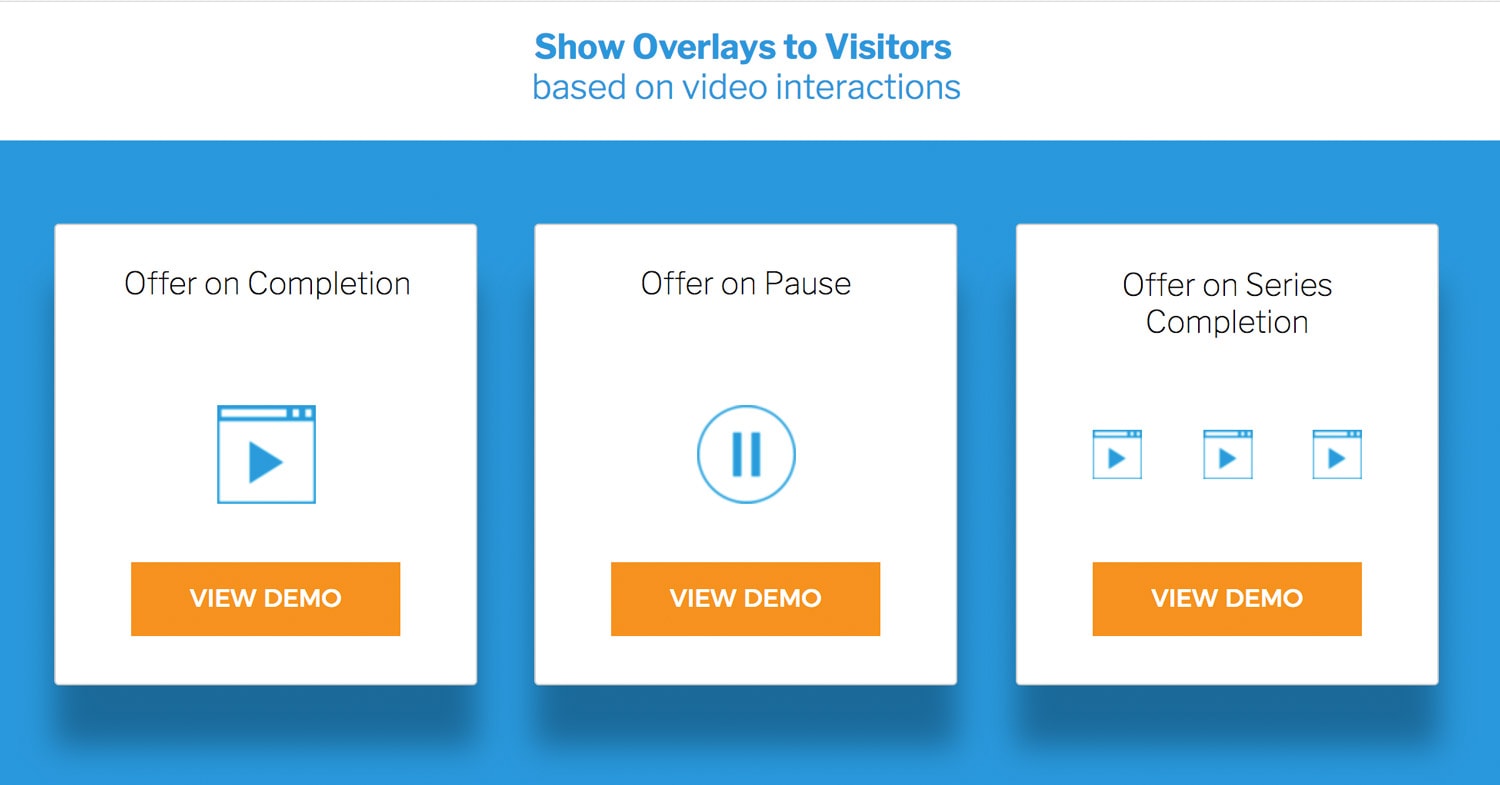
Using this method (requires a little Javascript), you can present your visitors/customers with a popup based on 3 different levels of interaction.
On completion
When the video has been watched to the end. Note that a popup presents a significantly large area to present an offer than the typical text/button CTA that appears in the middle of the video window. You can even instruct people to watch the whole video to get a special offer.
Here’s the Javascript
Here’s the CSS
On pause
This idea ups the cool factor for me. You can present an offer if someone pauses the video. A great place to ask a question (“Why did you stop watching”), or to present your offer right away.
Here’s the Javascript
Here’s the CSS
On series completion
Saving the best for last, this implementation allows you to monitor the viewing of several videos, show a live progress bar, and then present a reward/prize/offer when all of the videos have been watched.
This is great if you have a series of videos that you want to encourage people to binge watch Netflix-style, like The Landing Page Sessions, or a set of instructional videos that guide a new customer through a training or onboarding sequence.
Here’s the Javascript
Here’s the CSS
#5: Choose Your Own Adventure (CYOA) entrance experience
Do you have different target customer segment? At Unbounce we consider agencies and in-house marketing teams to be our ideal target customer archetype.
Given that you most likely have multiple ideal customer types, should they all be getting the same experience? No, of course they shouldn’t. But designing multiple experiences can be difficult. Which is why some experimental experiences can be incredibly eye-opening.
I’m a big fan of the Choose Your Own Adventure (CYOA) approach, and it’s not hard to create a few custom flows for your visitors.
By using an entrance popup with a simple self-identification question, you can drop cookies that help you create more customized experiences in other areas of your website.
I’d start with an “I’m an Agency or Marketing Team” type question.
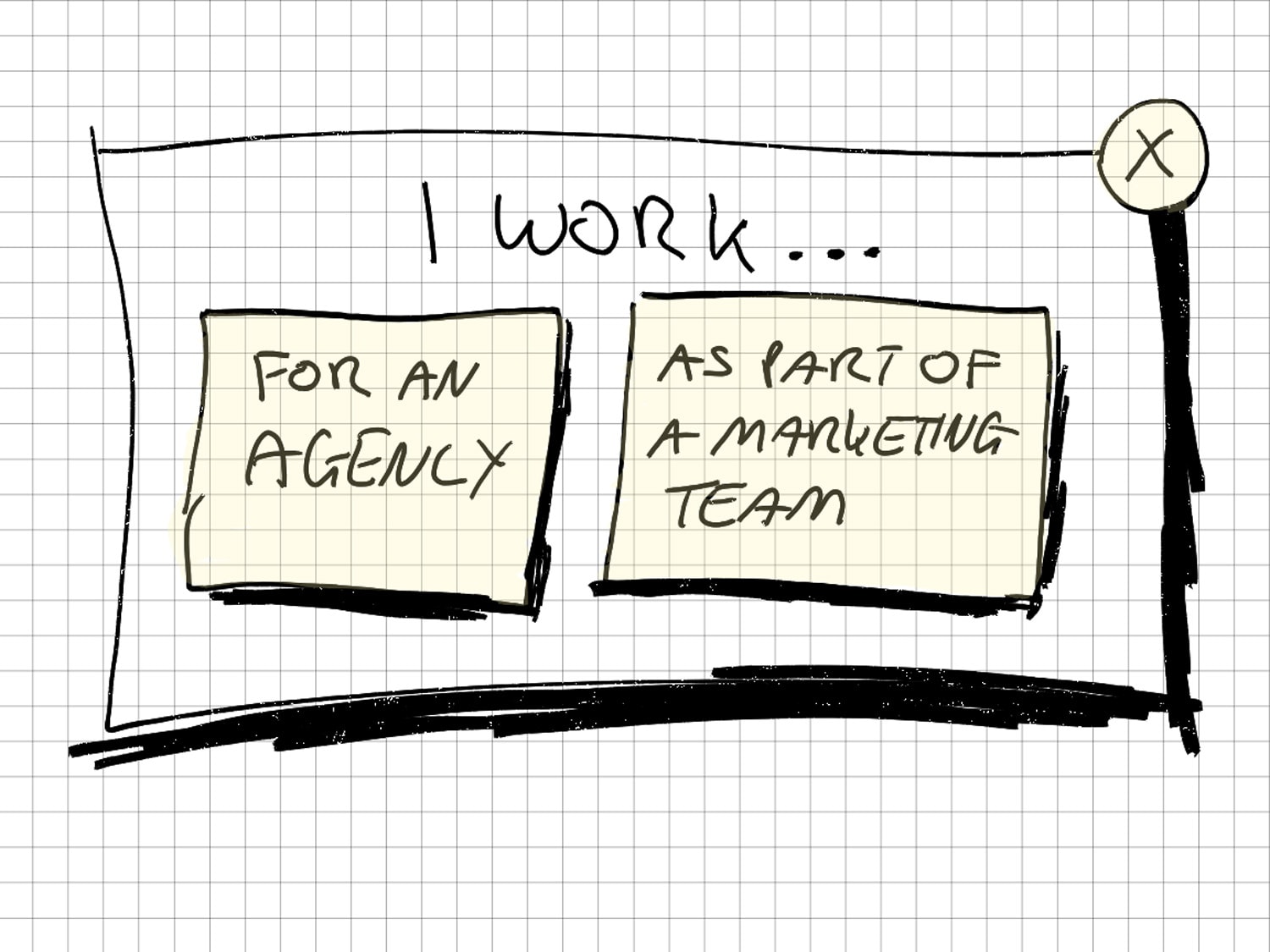
Once you’ve dropped the cookie(s), you can take that knowledge and create experiences elsewhere on your site (or other web properties), and you can redirect the visitor to the best experience you have on your site for that persona.
For example, if someone self-identifies as working at an agency, you could provide an agency-specific resource or offer if they try to exit your site on the pricing page. For example, “Did you know we offer an agency program that includes a, b, c ?” or “Would you like a demo of Unbounce with one of our agency specialists?
There are almost infinite ways you can leverage this approach just by asking once for people to identify themselves.
And once again, you didn’t have to change anything on your website.
#6: G2 Crowd awareness
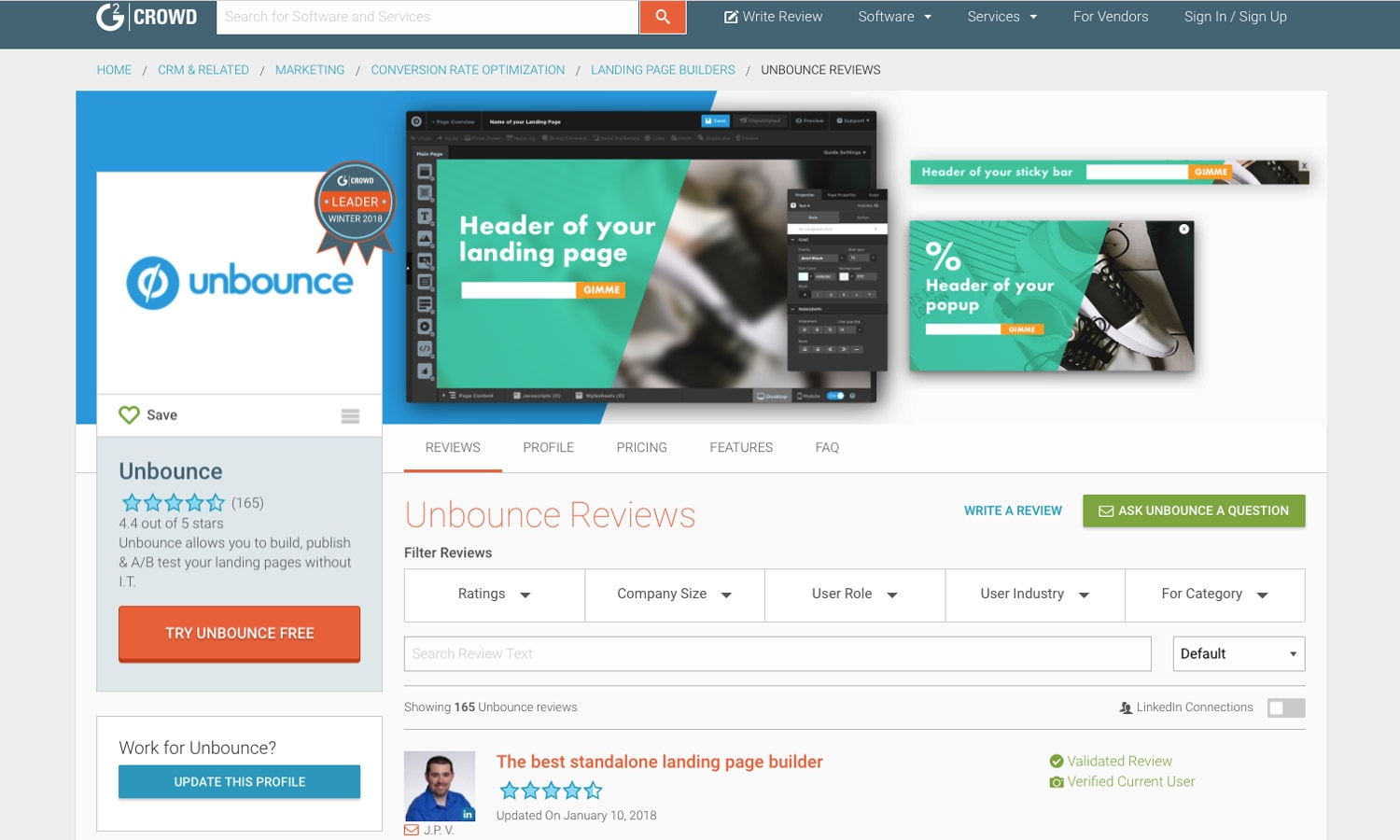
Got good reviews on G2 Crowd or Glassdoor? Embed some of the details on an entrance sticky bar for visitors to your “About Us”, “Team”, and “Careers” pages as social proof.
You could take your rating, a badge, or a review to use as social proof.
#7: G2 Crowd reviews
Ask customers (use the cookie you dropped on the login page for the login hijack example) to rate you on G2 Crowd. As you’re dealing with customers and they already do a lot for you, I’d suggest making this a subtle sticky bar and not an in-your-face experience.
#8: Welcome back MVP
If you know what your most important pages are you can use cookies and cookie targeting to drive people to them.
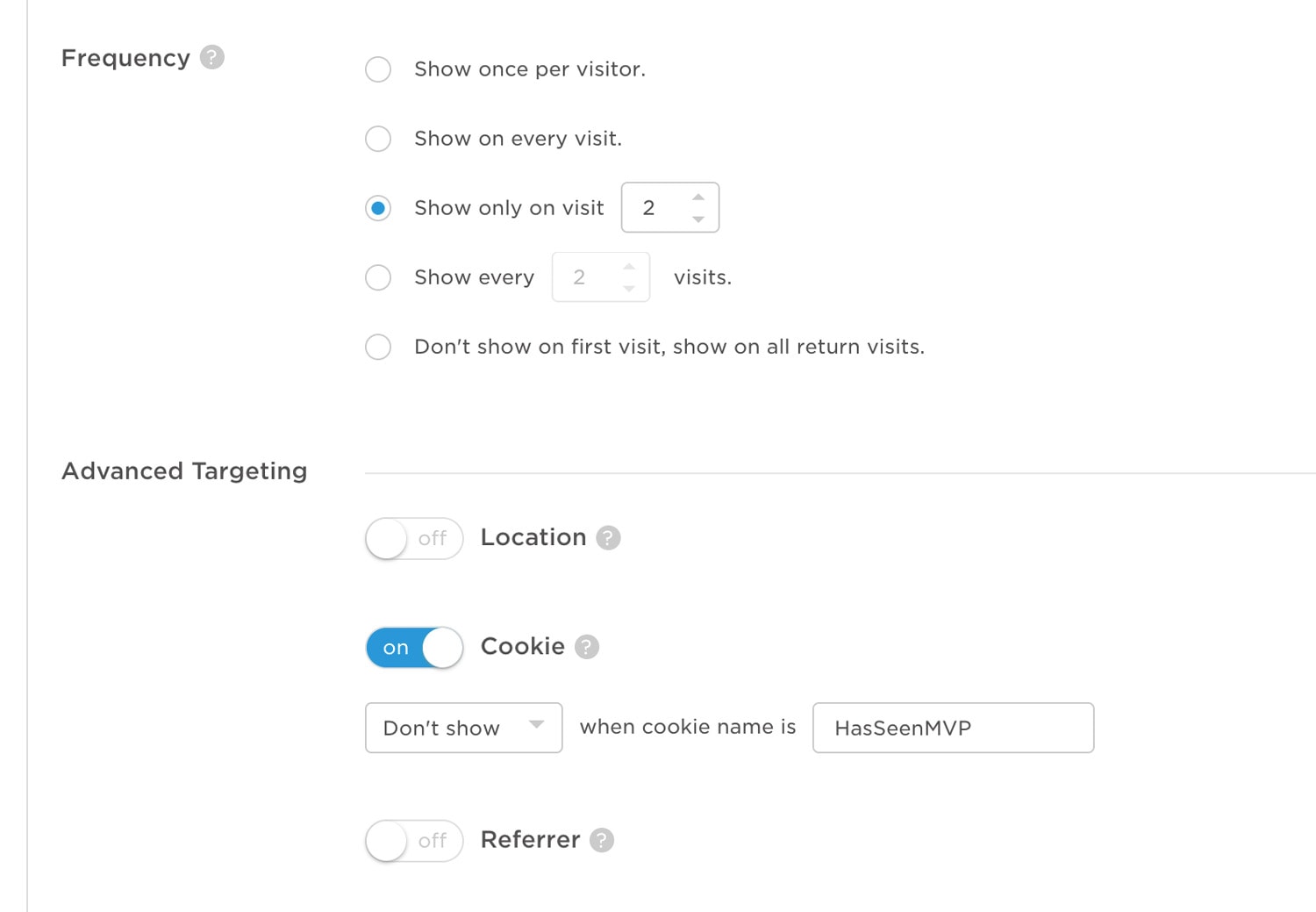
In my Advanced Triggers and Targeting post, I presented the “You Didn’t See My Most Valuable Page (MVP)” concept, where you set a cookie when visitors see your most valuable page(s). That way you can check for the existence of the cookie whenever someone leaves your site, and show them a popup directing them to the important content.
Using a similar approach, you can provide an entrance experience that welcomes them back and drives them to the important content.
To do this you’d combine cookie targeting (doesn’t have the MVP cookie) with a frequency trigger set to second visit. That way you know they are a repeat visitor and haven’t seen the MVP – as opposed to a first time visitor who hasn’t seen it which could mean they are already on their way there.
Create a Google Analytics report that tells you what % of visitors see your MVP, then observe if your Welcome Back MVP influences the number.
#9: Best Blog Content
In tomorrow’s final Product Awareness Month post, I’ll be sharing a lot of lessons I’ve learned over the past 30 days. One of those revolves around the topics of content that you’re writing about, and making sure they are things that people are A) interested in, and most importantly B) searching for.
To help you with this, you can use an exit popup to ask people which content they’d like to see more of. Then use this data (in combination with your SEO research) to guide your writing.
You can embed a simple Typeform in the popup to capture the responses.
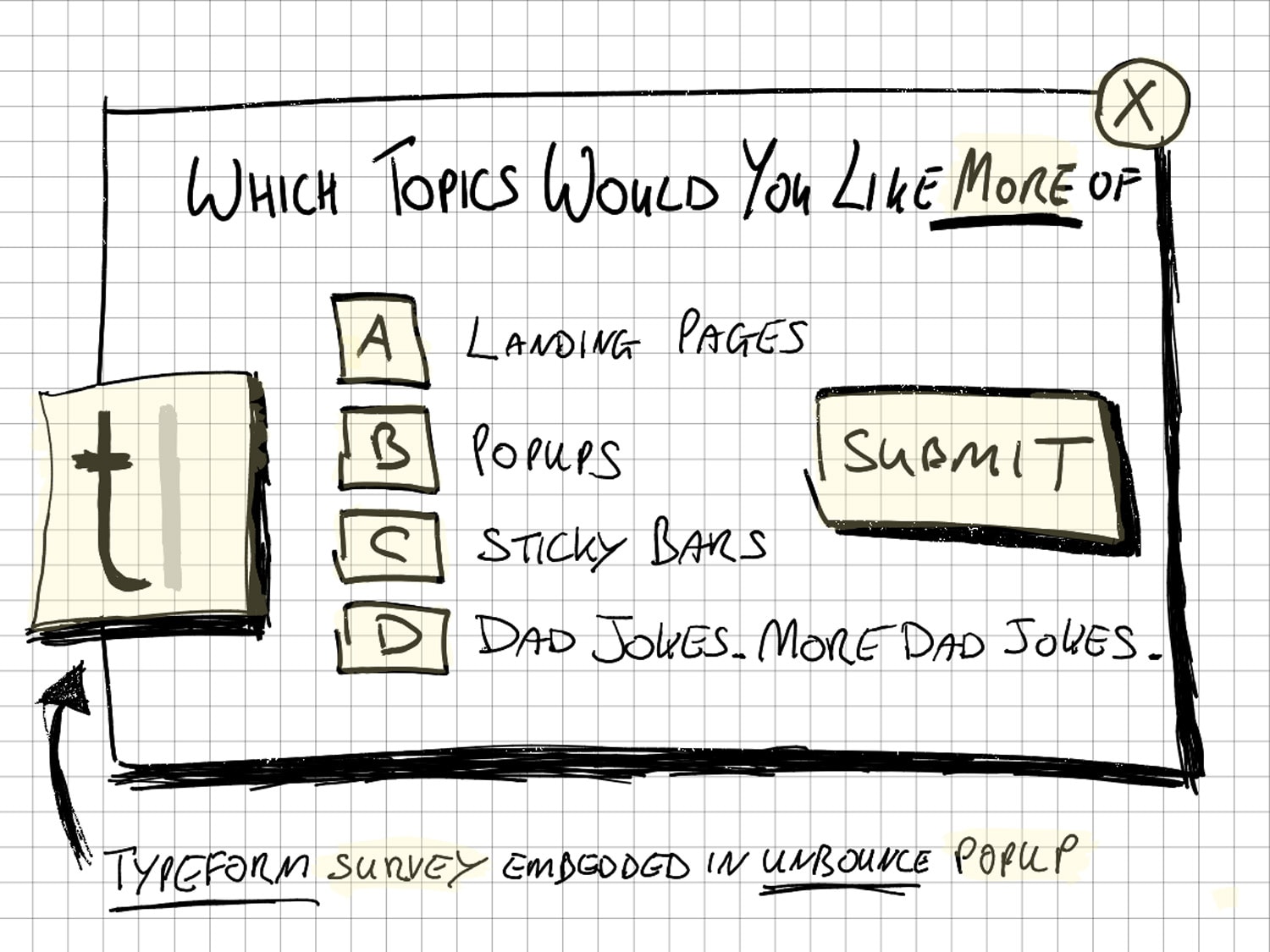
Note: to add a Typeform survey in Unbounce, simple paste the embed code (from Typeform) into a “Custom HTML” element that you drop onto your popup in the Unbounce builder.
#10: Product Awareness Clicker
If you want to collect data about the levels of product awareness you have, at the same time as increasing product awareness, this tip is for you.
While similar in terms of the question to the login hijack, your goal here is to target new visitors as opposed to existing customers.
Trigger a popup on your homepage or features page after a time delay, presenting a series of product/feature icons with the request: “Which products/features did you NOT know we provide?”.
To select the appropriate time delay, look at your analytics for the average time on page for the pages you’re targeting, and set it accordingly. You want to set it just below the average so people see it, but still have time to read your content.
You can measure the results with a click heatmap, or by embedding a Typeform survey in the popup like the previous example. I like Typeform because they have some beautiful and simple big-button layouts that are perfect for this concept.
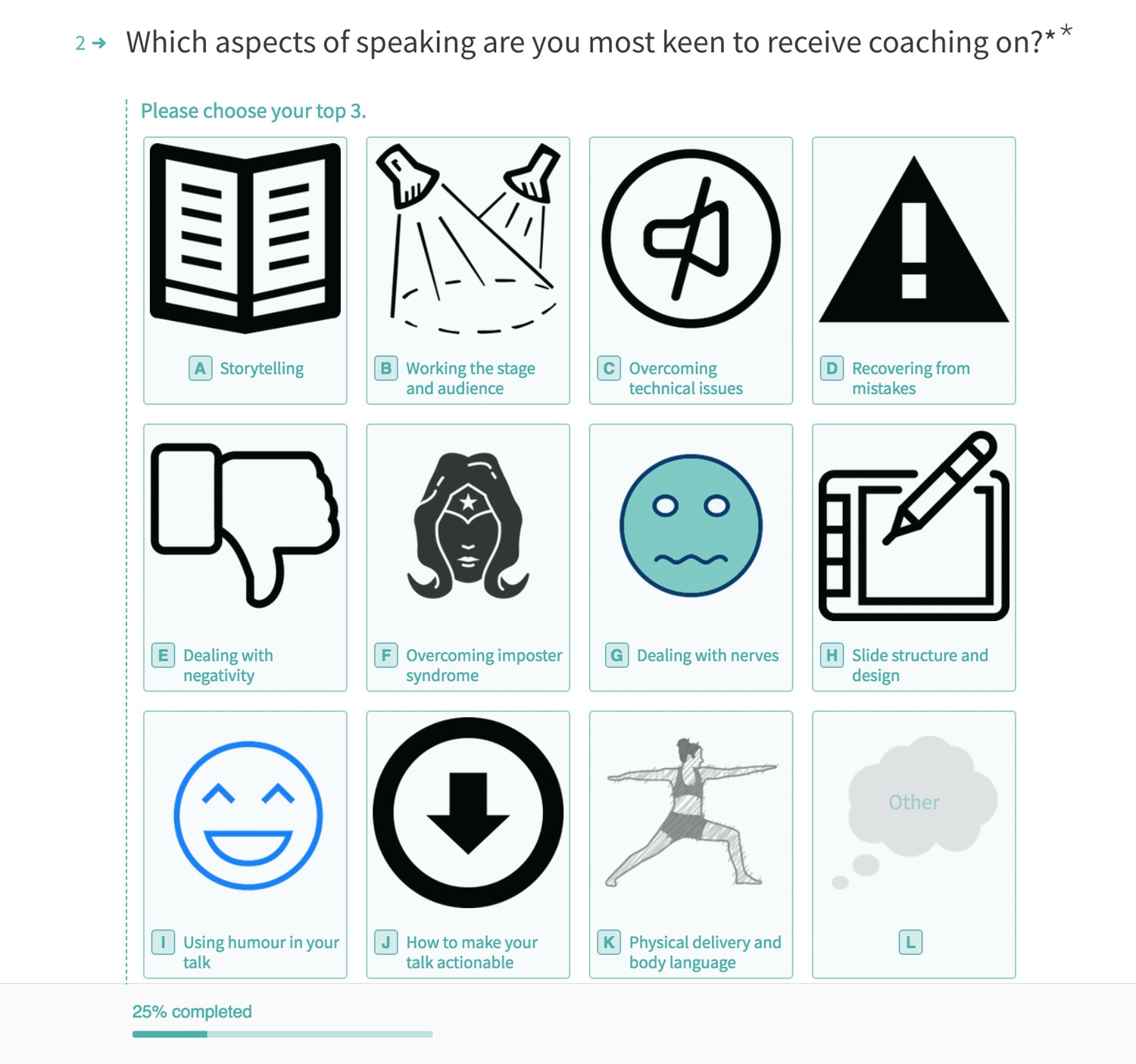
This is a good way to measure movement in your awareness metrics. For more clarity, segment customers from non-customers. You could do this with a second question on the Typeform survey that simple asks are you a customer. Or you could drop a customer cookie on your login or login success page and remove this cohort using the cookie targeting in Unbounce.
#11: Discount on 3rd exit
Just like shopping carts, pricing page abandonment is big deal, but you probably don’t want to give a discount the first time people leave, just because they’re leaving.
But if they repeatedly visit and leave your pricing page, it could be a signal that there’s an issue with them pulling the trigger. It might be the price point, and it might be worth experimenting with a discount using Popup or Sticky Bar.
You should be careful with discounts (if you’re a SaaS business) as they can affect your metrics in negative ways, but there is always a time and a place where it makes sense.
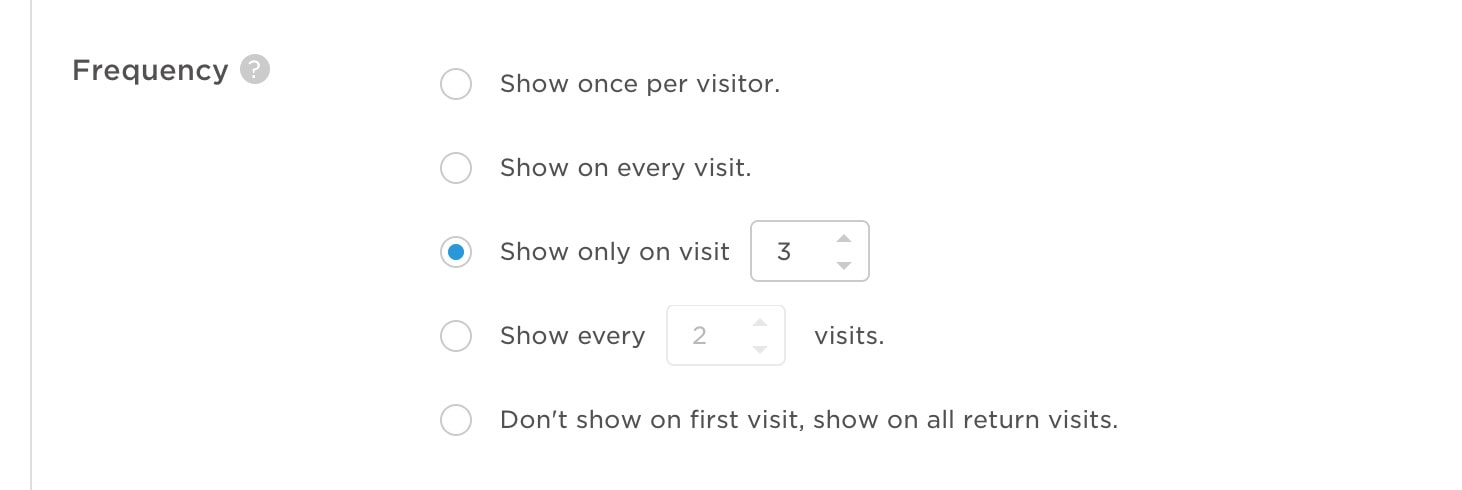
You can choose your own number, but I’d say that the third time someone visits and leaves your pricing page means it’s time to offer either a question (WTF dude?) or an offer/discount.
To do this with Unbounce, just use URL targeting for the pricing page, and show the popup on visit number 3.
So there you have it. A whole bunch of ways you can get into website optimization without bugging your web developer (more than once).
Aaaaand now, tomorrow marks the end of my 30 posts (that became 20) in 30 days product awareness challenge. This will be a transparent deep dive into everything I’ve learned over the course of the month, data from conversions, leads, clicks, adoption, awareness, and every interaction I’m able to consolidate in the next 24 hours.
See you tomorrow. I promise some very interesting learnings and results.
Cheers
p.s. Don’t subscribe to “Product Awareness Month”, because it’s over. Instead you should just read the entire epic 20-post collection when you have time for some binge-reading.
When Food Companies Use Lies (and Children!) to Fool Consumers

The social media activity has been swift in response to Stonyfield Organic’s latest video advertisement that uses children to push their non-GMO agenda.
Sadly, bashing GMOs has become a marketing trend so common that I barely raise an eyebrow anymore when I see a commercial for Dole fruit bowls, Triscuits or even non-GMO water, salt, kitty litter or dry cleaning.
I think what makes Stonyfield’s latest campaign so appalling is the use of children.
Filmmaker Natalie Newell, who directed the Science Moms short documentary agrees:
“If you want to talk about GMOs, awesome. Find experts (and there’s no shortage of folks who can talk on genetic modification and biotechnology) to define the term. But do not use children. Don’t use children to perpetuate these myths and further demonize biotechnology, all in the name of selling your yogurt pouches.”
Still, the broader issue of deceptive advertising needs to be addressed. I wrote in this space about Chipotle’s “Food with Integrity” campaign and their commitment to go GMO-free while serving thousand-calorie burritos laced with E.coli. There’s no integrity in serving food that is unhealthy – and unsafe – while telling your customers lies about biotechnology, which has contributed to more than 460 million acres of sustainable farming systems around the world.
The same is true for Danone, the world largest yogurt maker (and former parent company of Stonyfield): It announced last year it was “committing to getting rid of GMOs” in its flagship brands to further support sustainable agriculture. Meanwhile, advancements like GMO technology have allowed farmers to use fewer pesticides and herbicides, fossil fuels, and water, and prevent the loss of soil to erosion.
Hats off to the dairy industry who has decided they want to shed some light on this alarming and misleading marketing strategy with their “Peel Back the Label” campaign. They point to an article in The Delaware News Journal by Kent Messer, a professor at the College of Agriculture and Natural Resources at the University of Delaware:
“This trend toward fear-based labeling may help prop up profits for food manufacturers, but it comes at a much greater cost for consumers who are trying to make informed choices for their families.”
But back to Stonyfield… On their Facebook Page, the company acknowledges the controversy created by their children’s video and says “we appreciate the importance of a constructive fact-based scientific debate.” Then it urges readers who want more info on GMOs to visit – WAIT FOR IT – The Just Label It website, which contains absolutely nothing “constructive,” “fact-based” or “scientific” whatsoever. For those who don’t know, Just Label It was created by Stonyfield Organic CEO Gary Hirshberg for the purposes of pushing a mandatory GMO label on food products in the interest of “consumer transparency.”
And before I start harping on the hypocrisy, let’s get a snapshot of some of the pushback Stonyfield is getting:
“You exploit the fact that the average parent is ignorant about how food is grown and the sciences behind it. You use children you’ve brainwashed to manipulate and spread fear.”
“It’s hard to trust in the safety of food made by a company with such rigidly anti-science views. I mean, what’s next? Will Stonyfield decide that bacteria are a myth and stop pasteurizing?”
“Offering choices is great, confusing customers with misinformation is NOT!”
“How about instead of using fear based marketing you actually try and be informative. You’d run into less problems.”
To all the Stonyfields, Chipotles, Danones (among others) out there, I leave you with this: If you want to be organic or non-GMO, please do so. The American food market thrives on the principle of consumer choice. But don’t call organic or non-GMO healthier (it’s not) or more environmentally sustainable (it’s definitely not).
Feeding the world is a daunting task with real challenges that come in the form of droughts, floods, disease, insects, weeds and all those pesky regulations governing food production. Everyone needs to work together – using a variety of tools and farming practices – and hopefully, with a little more integrity in the marketplace.
UPDATE:
On its Facebook page, Stonyfield posted “we welcome the conversation and appreciate your taking the time to reach out,” and yet Stonyfield has reportedly blocked a tremendous amount of feedback. In response, a “Banned by Stonyfield” Facebook group has been created where these voices are engaged in a ongoing public dialogue on the issue.

Facebook Reveals ‘Privacy Principles’ in Preparation for New Data Protection Laws
Facebook is taking more steps to improve privacy for its users. For the first time, the social media giant will publish its privacy principles or guidelines that reveal how user info is stored and shared. In addition, the company will introduce a new, more visible Privacy Center to make it easier for users to change their privacy settings.
As Facebook is preparing for the new data protection laws enacted in Europe, the tech company is now making it easier for users to control their privacy setting. Its new Privacy Center will be a single place that allows users to control the visibility of their personal data.
These new measures are Facebook’s response to feedback from policymakers, users, as well as data security experts. As Facebook’s chief privacy officer Erin Egan puts it, “Privacy controls are only powerful if you know how to find and use them.”
Facebook releases privacy principles to help users keep their data secure https://t.co/GkLFzS1tDG pic.twitter.com/VJRHCGchFs
– The Hill (@thehill) January 29, 2018
Aside from the more visible Privacy Center, Facebook has made its privacy principles public. The company’s announcement was done ahead of the General Data Protection Guidelines (GDPR) implementation in Europe.
“We recognize that people use Facebook to connect, but not everyone wants to share everything with everyone – including with us,” the company explained in its blog post. |It’s important that you have choices when it comes to how your data is used.”
There were seven privacy principles announced by Facebook. Among the seven, however, two principles seem to stand out and would likely impact how user privacy plays out in the future.
“You own and can delete your information,” says Facebook’s fifth principle. The company added that it would ultimately be its user’s decision on what to share and whom to share it with.
Also, its last principle simply says, “We are accountable.” However, it is unclear if the company is owning accountability for future data breaches, but it asserts that it will put “products through rigorous data security testing.”
[Featured image via Pixabay]
The post Facebook Reveals ‘Privacy Principles’ in Preparation for New Data Protection Laws appeared first on WebProNews.
Three Reasons Why Good Leader Spend Time Planning
Three Reasons Why Good Leader Spend Time Planning
A McDonald’s Franchisee Just Revealed the 1 Stunning Problem That Threatens Everything the Burger Chain Is Trying To Do
Did McDonald’s see this coming?
Jennison Associates LLC Trims Stake in bluebird bio Inc (BLUE)
bluebird bio logo Jennison Associates LLC trimmed its holdings in bluebird bio Inc (NASDAQ:BLUE) by 18.7% in the 4th quarter, according to its most recent disclosure with the Securities and Exchange Commission. The firm owned 540,697 shares of the biotechnology company’s stock after selling …