AppZen has released a report, The State of AI in Business Spend, which shows that enterprise companies are only auditing 10 percent of employee expenses in expense reports submitted, which makes it very unlikely they will catch mistakes or even outright fraud.
The report, which used anonymized data from hundreds of companies, found that companies were missing fraudulent expenses related to strip clubs, escorts, tattoos, gambling, and much more.
AppZen offers a solution that processes data crawled from the internet through their AI-powered algorithm to automatically identify the type of business being expensed and flagging it for human auditors.
AppZen software uses AI to help companies find expense report abuse
Anant Kale, CEO of AppZen, discusses in an interview on Fox Business, how AppZen helps companies use AI to audit 100 percent of reimbursable employee expenses in order to avoid getting ripped off:
Companies Using AI to Identify Expense Report Fraud
AppZen has released its Business Spend Report where we have compiled private and anonymized data from hundreds of companies across a variety of industries. The results are very surprising. What we found are that companies who are relying on human auditors are auditing less than ten percent of their expenses. This means that if you are an employee of one of these companies the chances of ever getting caught is close to zero.
Companies that are using artificial intelligence are auditing 100 percent of their expenses within minutes. They are finding lots of surprising things. One of them is concerning duplicates. You would be surprised to find how many employees are getting paid for the same expense. This means that some employees are submitting the same expense with different descriptions and different amounts which is very difficult for auditors to catch.
AI Makes it Harder for Employees to Lie on Reports
Another expense is where employees or a group of employees are submitting dinner meals with customers with what seems to be a restaurant when in reality when the artificial intelligence technology goes out and scours the web for that data we found that sometimes those or strip clubs and sometimes even escorts. That is happening far more often that you would like to believe.
These were going through the companies systems before AI came in. The reason why they are very difficult for human auditors is that they just don’t have the time necessary and the number of expenses being reviewed is much less with humans.
AI Software Looks at 100% of Reimbursable Expenses
When AI does it, it looks at each and every expense. It doesn’t just use the data on the expense report but also uses things like social data and reviews from websites and then puts the doc together. So it’s very difficult to escape from what the AI technology can find out versus what a human auditor can.
What the AI technology does is unravel what’s going on with the expenses. This lets the company determine what the best way to deal with information is. Often, it includes better communication with employees. We are seeing all kinds of things including mistakes, fraud, and non-compliance with company policies and sometimes government regulations.
These are on all kinds of expenses around travel, hotel, and airfare, which you would believe are far more controlled in companies today.
Roy Zwahlen took a long shot when he requested a meeting with an investment firm at the 2017 BIO International Convention in San Diego. As Assistant Dean for Innovation and Strategy at the UNC Eshelman School of Pharmacy and the Eshelman Institute for Innovation, Zwahlen was in search of a partnership that could help bring the University’s science to the marketplace. He was aware of the firm’s interest in unique partnerships with leading academic research institutions and discovered, to his delight, the firm was participating in BIO One-on-One Partnering™.
BIO One-on-One Partnering facilitates upwards of 45,000 one-on-one meetings among 7,000 partnering delegates during the four days of the Convention. It has an intuitive interface that allows participants to search company and investor profiles to identify the right prospects and begin a direct dialogue with potential partners. The impressive database includes biopharma and medical technology companies, in-licensors, investors, and others across the life sciences. The program will automatically add scheduled meetings to Outlook calendars and retains meeting histories across multiple conferences.
So Zwahlen took his shot. “I didn’t actually think it would be a good place to connect with them. I presumed the VCs get a lot of requests at these meetings and have limited capacity to field meeting requests. However, I was pleasantly surprised that they were available and interested in meeting.
Zwahlen was strategic in his use of the partnering system. He sent his meeting requests early on (participants can sign up as early as February!) and he made sure his pitch to the firm aligned with what they were interested in.“UNC was looking for unique public-private partnership models that could both increase our chances of taking research from the bench to the bedside and accelerate the process. When we learned that the investment firm was exploring unique partnerships with leading research institutions and that they were in the BIO partnering system, we hoped BIO would be the perfect place to begin discussions about a potential partnership and we were pleasantly surprised.”
The rest, as they say, is history. In October of last year, UNC-Chapel Hill and the investment firm announced a $65 million commitment promising new drug research at UNC-Chapel Hill across a wide range of therapeutic areas through the creation of a company called Pinnacle Hill. Profits from successful projects will be shared by the firm and UNC-Chapel Hill.
Preparation, planning and research were the keys to Zwahlen’s success. Getting started early allowed him to evaluate the partnering database and meet those with mutual interests. BIO provides guidance for using the partnering system with webinars like this every year and a team is available to answer questions anytime.
As Zwahlen noted, “The Convention was really the critical starting point for the relationship. The process took several phone calls, several onsite visits by the investment firm to evaluate our science, a process of learning how the other partner works and how best to streamline our efforts…”
UNC-Chapel Hill can attest to the BIO 2019 theme-It Starts with One. A promising partnership “started with one” meeting and blossomed into a solid collaboration.
For years, scientists and researchers have been working to extract sugar molecules in plant life, known as cellulose. However, until now, it has proven to be nearly impossible to extract these sugars in a clean and efficient manner because they are locked tightly in a plant’s cellular walls.
As CBS profiled on 60 Minutes, Marshall Medoff, an 81-year-old inventor in Massachusetts, has uncovered the secret to accessing plant cellulose and transforming the inedible plant life into environmentally-friendly fuel and other applications.
By reversing the way large electron accelerator machines typically operate, Medoff has been able to break biomass apart and convert plant sugars into environmentally-friendly ethanol, gasoline and jet fuel. According to an independent study, Medoff’s ethanol actually emits 77 percent less greenhouse gas emissions than regular corn ethanol.
The technology could be a gamechanger because the fuel could be put into existing gas station pumps easily, requiring very little change in consumer behavior. A driver would simply walk up to the pump and be able to put this environmentally-friendly fuel in his or her vehicle.
The reason plant cellulose is such an alluring option as an energy resource is because it is the most abundant biological material on earth.
“Cellulose is everywhere,” said Medoff in the interview with CBS 60 Minutes. “I mean, there’s just so much cellulose in the world and nobody had managed to use any of it.”
Medoff’s technology is also being used to create healthier sugar and plastics that can be programmed to disintegrate within a specific timeframe.
This is just one of many examples of how industrial biotechnology is enabling the production of a variety of biofuels, bioplastics and other bio-based products, and helping make our lives and environment cleaner, safer and healthier.
Let’s Start from the Beginning: What is Social Proof?
Social proof is the result of a deeply rooted psychological bias. It implies trust in other people.
The forms of this trust include the belief that the majority knows better and that the best way to make a decision is to look at the decisions other people have made. As with most psychological biases, this one generally makes sense.
Think of your behavior in any new environment: at a new workplace, at a party where you don’t know anyone or in a foreign country. Every reasonable person first will observe what others do before making any decisions regarding their own behavior. In the end, this is how evolution taught us to think. Humans that would appear in a new tribe and would talk and dance without figuring out the language and rules of politeness first were killed.
However, relying on the behavior of others is a mental shortcut. We’re supposed to take the behavior of other people as a clue rather than as proof that the behavior is correct. Instead, we often see others and simply copy their ways, ignoring or devaluing other clues.
The bias is most commonplace when we’re uncertain as to what to do in various situations. The huge effect of social proof has been shown through different activities people undertake, from donating money to charity to engaging in “safe” or “unsafe” behavior. Individuals many times rely on others to show them what’s “right”, regardless of their own knowledge.
Social Proof is a Gift for Marketers
Obviously, social proof is a gift for marketers. Incidentally, this bias is exactly why word of mouth is so powerful. If people even copy others’ risks, how could they resist copying others’ product choices?
How Social Proof Supports Word of Mouth
Imagine you see a well-crafted ad that tells you about the benefits of the product you’ve always wanted from Brand A. The ad has stats, proof and a scientific explanation of why it’s a good product. Basically, it’s not your usual eye-grabbing senseless ad – it’s a truly good explanation as to why the product is worth it. Then, imagine your colleague tells you in a conversation on the subject that he bought the product from Brand B and that it’s absolutely amazing.
Which product will you choose: the one from Brand A or the one from Brand B?
If you’re not sure, I’ll tell you for certain: the one from Brand B.
Word of mouth is extremely powerful. It derives from the same principle of social proof – you see a real person, someone you know even, and you trust their opinion. Then imagine how this is amplified if you hear not one, but a couple of people you know talking about the product from Brand B! It also could be a random Instagram user that you follow for no particular reason extolling the virtues of the Brand B product – still very convincing! The effect is comparable to a geometric progression.
Employing social proof is a fantastic way to leverage word of mouth. Let’s look at 4 types of social proof, and how you can leverage it.
1. Expert Social Proof
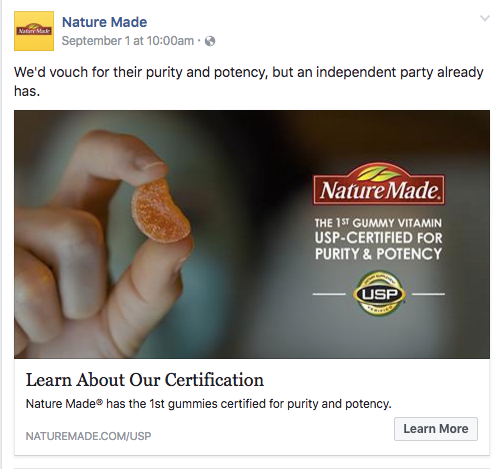
While some believe that “we’ve had enough of experts”, generally people still trust those who are considered experts more than those who are not. This at least sounds reasonable. That is why you’ll see doctors in healthcare-related ads, sports figures in sportswear ads and science-related people in ads for electronics, heavy equipment, medicine and everything in between. While we might look at the ad and not remember any other info, we’ll most likely remember that it was backed by an expert and pass this information along in a relevant context.
2. Celebrity Social Proof
Weirdly enough, people talk a lot about celebrities. They discuss their love life, lifestyle, fashion and anything else associated with them. It’s puzzling, but there’s no doubt the interest of most people in celebrities isn’t decreasing with time.
There’s a reason celebrities’ posts on social media are extremely expensive – that’s because a mention of a product from a celebrity doesn’t only reach a huge amount of people – it also starts a broader discussion about the body lotion their favorite model uses, for example. The reach keeps snowballing, and the social proof grows.
However, I’m sure you see a problem: celebrity marketing is ridiculously expensive. Luckily, we don’t always need a football player or an actress doing the job. For most products, micro-influencers – individuals who are famous on social media – will do the trick, as long as they have a substantial following (10k-100k) and a good engagement rate, with the latter being far more important.
3. User Social Proof
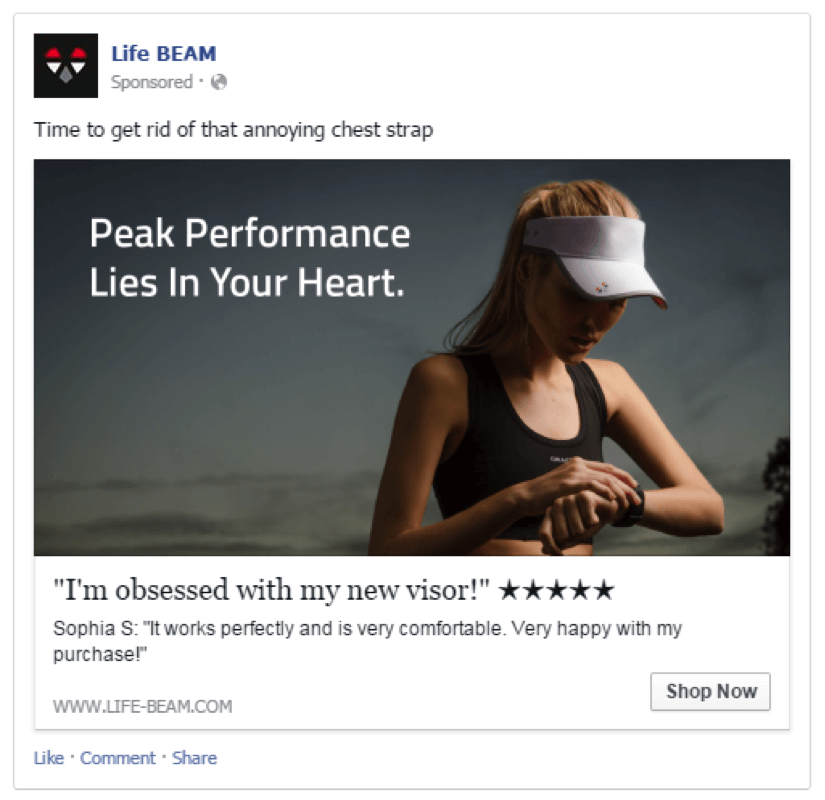
The importance of user social proof becomes clear the moment you open any trendy website. You might not see product descriptions or prices, but you will see social proof in all its forms. There will be a list of companies that have used the product (if it’s B2B), a list of user testimonials (in all cases), reviews or a proud note that the product or service has been reviewed on G2 Crowd, or TripAdvisor or Yelp. Websites where users can leave reviews and buy the product have been most successful. People love reviews – it’s their online access to word of mouth.
It’s especially interesting that people often don’t even seem to care about the kind of reviews. Counterintuitively, researchshows that when it comes to reviews, it’s the quantity that counts – how many people have used the product. The size of the social proof is enough (or too overwhelming?) for them not to have to examine the details. They simply do what others have already done: buy the product.
User social proof isn’t only in reviews and testimonials, it’s also in social media following. Buying social followers is a very controversial practice: the algorithms of social media platforms are made so that purchasing fake accounts might hurt the reputation of your social account. However, growing a following is important in terms of growing social proof: the more people show that they use the product, the more others accept that the product is a good one automatically, and even share this information further.
4. Friends’ Social Proof
The most powerful social proof in terms of its effect on word of mouth is social proof that comes from friends. We trust information that’s shared by people we know and share this information further with much excitement. As it usually happens, it’s hard for marketers to do anything with this knowledge. Friends’ social proof is very hard to achieve in any semi-authentic way. You generally just make a good product and hope people will pass the information along. Some companies, such as Uber and AirBnB, offer discounts for friends, which is a neat thing to do as it plays on both social proof and the desire of a person to get a discount.
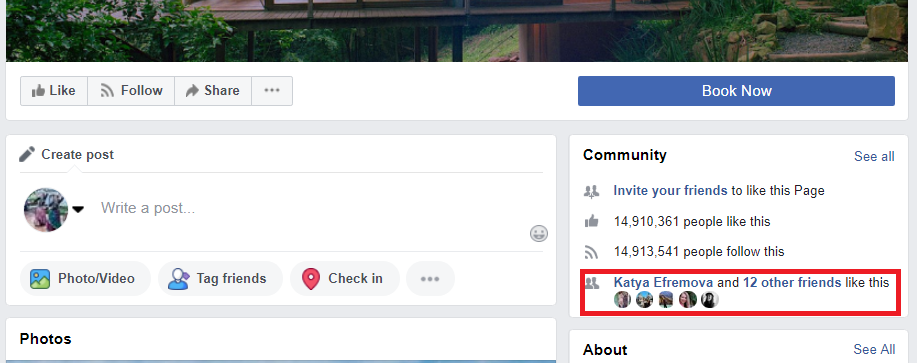
The other way in which marketers have successfully employed friends’ social proof is through showing which Facebook friends or email contacts are using the service. The list is shown to you when you register at websites like Couchsurfing or LinkedIn. It also works for online services that show you which of your online friends are using the service. For example, in a study on online security, it was found that showing the users that their friends are using the online security feature is the most effective persuasion method.
Conclusion
Social proof and word of mouth are trusted concepts. It’s can be tricky to implement the powerful word-of-mouth strategy without putting some effort in growing social proof. Go ahead, experiment, and, most importantly, make your product worth talking about!
Massively Grow Your Business without Wasting Money on Ads
Join Jay Baer for two special webinars (one for B2B, and one for B2C) on Jan 15, 2019 about how to use word of mouth to grow your business more efficiently in 2019. B2B sign up | B2C sign up.
For years, scientists and researchers have been working to extract sugar molecules in plant life, known as cellulose. However, until now, it has proven to be nearly impossible to extract these sugars in a clean and efficient manner because they are locked tightly in a plant’s cellular walls.
As CBS profiled on 60 Minutes, Marshall Medoff, an 81-year-old inventor in Massachusetts, has uncovered the secret to accessing plant cellulose and transforming the inedible plant life into environmentally-friendly fuel and other applications.
By reversing the way large electron accelerator machines typically operate, Medoff has been able to break biomass apart and convert plant sugars into environmentally-friendly ethanol, gasoline and jet fuel. According to an independent study, Medoff’s ethanol actually emits 77 percent less greenhouse gas emissions than regular corn ethanol.
The technology could be a gamechanger because the fuel could be put into existing gas station pumps easily, requiring very little change in consumer behavior. A driver would simply walk up to the pump and be able to put this environmentally-friendly fuel in his or her vehicle.
The reason plant cellulose is such an alluring option as an energy resource is because it is the most abundant biological material on earth.
“Cellulose is everywhere,” said Medoff in the interview with CBS 60 Minutes. “I mean, there’s just so much cellulose in the world and nobody had managed to use any of it.”
Medoff’s technology is also being used to create healthier sugar and plastics that can be programmed to disintegrate within a specific timeframe.
This is just one of many examples of how industrial biotechnology is enabling the production of a variety of biofuels, bioplastics and other bio-based products, and helping make our lives and environment cleaner, safer and healthier.
After 30,000 real-world driverless Lyft test rides in Las Vegas consumers have rated it an amazing 4.95 out of 5, says Lyft’s Chief Strategy Officer Raj Kapoor. He says that in the last 12 months the system’s gotten smarter and the ride has gotten smoother. “It has measured reactions and acts like a really good driver versus maybe an inexperienced driver,” says Kappor. “That’s a big change.”
Raj Kapoor, Chief Strategy Officer at Lyft, was interviewed by PCMag at the Consumer Electronics Show in Las Vegas:
Consumers Rate Selfdriving Lyft Rides 4.95 Out of 5
What’s changed changed in the last 12 months with our selfdriving tests is first of all the system’s gotten smarter. The smartness comes out in terms of planning and prediction. You can now tell how smooth the selfdriving ride is. If it’s seeing pedestrians or lots of cars it doesn’t make knee-jerk reactions. It has measured reactions and acts like a really good driver versus maybe an inexperienced driver. That’s a big change.
Two is that we broadened the area that we’re operating significantly. We’re operating a geofence that covers almost all the major hotels in Las Vegas and you can go anywhere in that area versus very specific points.
It’s one of those rare instances where a cool demo from CES right away becomes a live service. We have now 30,000 rides that we’ve had in the system and so far the feedback has been awesome. Consumers have rated it a 4.95 out of 5 stars and 9 out of 10 people that go on a ride would come back and do it again.
We’re really quite pleased with it. I think people have a lot of questions around self-driving, there’s some fear, but once they get in and do the ride they are really excited about it and ready to do it again.
It’s using the same scale as normal Lyft rides and in their mind it’s that same perception of how comfortable, clean, did the person or the robot drive well, all those things go into account. The automated Lyft is rating pretty high but the human drivers definitely get up there too. But 4.95 out of 5 is very respectable.
Lyft Using Las Vegas Data to Perfect the Selfdriving Ride
We can notice a lot of things with this real selfdriving test. Las Vegas is a great proving ground because there are so many people from around the world that come here. You’re not just having residents that are here. You’re having people that are using it for their vacation, using it for going back and forth, so we’re able to collect lots of data from a big diverse group of people.
We’re able to see what the repeat use is like. What do they like about it? What do they dislike about it? How much do they like to walk to the vehicle versus not? There are all these little nuances that go in.
Another example is around remote assistance. We noticed that the people love to have a conversation with the safety driver. They’re so excited at that moment. The question we have is as we move toward a future without a safety driver is how do we still get that interaction with the consumer? Can we have a remote assistant do that? We’re learning all these little things by being in the real life out there with people.
In fact, there are two people in the front. There’s a safety driver and also a safety engineer that’s in the front. So usually it’s the safety engineer that’s answering the questions. The safety driver is very focused on the road.
What doing now is developing remote assistance systems where you can talk to a lift operator and ask the questions that you need to ask via a very conversational interface with the consumer. There’s a lot going on there and there’s a lot going through their head around building trust. What is this car seeing? Is it acting the way that I would act? Then asking questions about how does that technology work? How can it do this?
More Human Drivers Will be Needed, Not Less
Going to the question around drivers. We still believe that there will be a need for more human drivers than there are even today. If you look at it these ride-sharing services in the US make up about 0.5 percent of vehicle miles traveled. Even if we go to 5 percent and the majority of rides become self-driving, if you do the math on that growth of the overall number of rides, you need even more drivers than you have today.
Also, this technology is great but it’s going to be slowly rolled out. It’s going to take a while for it to be able to do all conditions, all places, all the time.
We haven’t even begun to imagine around the new economy that comes out of self driving vehicles. There’s so much infrastructure that needs to be built around parking and charging and even mundane things like cleaning cars. Then there are serve there are groups of people that need to have assistance, whether it’s elderly people, people requiring physical assistance, or young children. We think there are going to be opportunities abound.
Obstacles to Overcome with Driverless Cars
There are a number of obstacles to overcome with driverless cars. Can I trust that this vehicle is going to operate safely, not just for me but for all the environment and community around us?
Two, is the technology itself. I think we’re on a good path and we’re improving but it’s going to take some time to get there. The other piece of it is that the cost of the vehicles are significantly expensive right now. They’re using expensive computers, expensive sensors, and they’re not made necessarily to last for a long time because they’re in a lot of R&D stage.
So the reliability and the costs have to get better. Then on the government side, the regulations that need to allow for this to flourish. We’re seeing good progress there. If we continue to have a federal level on safety standards then that’s something that’s really positive because it’s not going to be that you have to create a specific car for specific jurisdiction. We think those are the barriers but they all seem very doable.
Surprised at How Quickly Micromobility Has Taken Off
We classify all this (scooters and bike) as micromobility. What we found is that there’s really an unmet need for that zero to two-mile range short distance trips. Yes you could take a Lyft or you could potentially walk but you’re in that zone, especially if it’s a half a mile or more. It is a really convenient thing to do. It’s also a really fun thing to do whether you’re biking or scooting and especially if it’s electric propulsion.
I’m also surprised at how quickly that has penetrated but I think we’re living in a world now where there’s mass adoption, there social networks, and the innovation that’s coming that came in software so fast we’re seeing in hardware. New versions of scooters are about every month. There’s some loss rate and breakage rate that is acceptable given the high usage and it works for the consumer because it’s still a very reasonable price to get around town.
Lyft Helping Society Shift Away From Owning a Car
For people not to own a car, it’s really going to be a stitching together of a number of different modalities. Whether it’s bike, scooters, walking, or ride-sharing together, to provide a really good alternative to owning a car, which is expensive, a hassle, has parking, congestion, and emissions. It’s a really big problem that all these things together are going to be solving.
We want to get them from point A to point B in the most convenient way that they could get there and without owning a car. That’s the key criteria.
I think there will clearly be a big group of the population, especially that lives in cities, that really will not be able to justify owning a car. All the use cases that you’re thinking about you could utilize by short-term rentals, car sharing, ride-sharing, micromobility, or also public transit.
We’ve integrated into public transit and it’s the best way to get around in a lot of instances and we’re feeding into that. There’s a lot of inertia still about buying a car and some people are still wrapping up a car in their self-worth and their identity. That’s changing, especially with young people.
For years, scientists and researchers have been working to extract sugar molecules in plant life, known as cellulose. However, until now, it has proven to be nearly impossible to extract these sugars in a clean and efficient manner because they are locked tightly in a plant’s cellular walls.
As CBS profiled on 60 Minutes, Marshall Medoff, an 81-year-old inventor in Massachusetts, has uncovered the secret to accessing plant cellulose and transforming the inedible plant life into environmentally-friendly fuel and other applications.
By reversing the way large electron accelerator machines typically operate, Medoff has been able to break biomass apart and convert plant sugars into environmentally-friendly ethanol, gasoline and jet fuel. According to an independent study, Medoff’s ethanol actually emits 77 percent less greenhouse gas emissions than regular corn ethanol.
The technology could be a gamechanger because the fuel could be put into existing gas station pumps easily, requiring very little change in consumer behavior. A driver would simply walk up to the pump and be able to put this environmentally-friendly fuel in his or her vehicle.
The reason plant cellulose is such an alluring option as an energy resource is because it is the most abundant biological material on earth.
“Cellulose is everywhere,” said Medoff in the interview with CBS 60 Minutes. “I mean, there’s just so much cellulose in the world and nobody had managed to use any of it.”
Medoff’s technology is also being used to create healthier sugar and plastics that can be programmed to disintegrate within a specific timeframe.
This is just one of many examples of how industrial biotechnology is enabling the production of a variety of biofuels, bioplastics and other bio-based products, and helping make our lives and environment cleaner, safer and healthier.
For years, scientists and researchers have been working to extract sugar molecules in plant life, known as cellulose. However, until now, it has proven to be nearly impossible to extract these sugars in a clean and efficient manner because they are locked tightly in a plant’s cellular walls.
As CBS profiled on 60 Minutes, Marshall Medoff, an 81-year-old inventor in Massachusetts, has uncovered the secret to accessing plant cellulose and transforming the inedible plant life into environmentally-friendly fuel and other applications.
By reversing the way large electron accelerator machines typically operate, Medoff has been able to break biomass apart and convert plant sugars into environmentally-friendly ethanol, gasoline and jet fuel. According to an independent study, Medoff’s ethanol actually emits 77 percent less greenhouse gas emissions than regular corn ethanol.
The technology could be a gamechanger because the fuel could be put into existing gas station pumps easily, requiring very little change in consumer behavior. A driver would simply walk up to the pump and be able to put this environmentally-friendly fuel in his or her vehicle.
The reason plant cellulose is such an alluring option as an energy resource is because it is the most abundant biological material on earth.
“Cellulose is everywhere,” said Medoff in the interview with CBS 60 Minutes. “I mean, there’s just so much cellulose in the world and nobody had managed to use any of it.”
Medoff’s technology is also being used to create healthier sugar and plastics that can be programmed to disintegrate within a specific timeframe.
This is just one of many examples of how industrial biotechnology is enabling the production of a variety of biofuels, bioplastics and other bio-based products, and helping make our lives and environment cleaner, safer and healthier.
When you’re selecting cover photos, shared images, and other social media assets, knowing the basic image dimensions might not cut it.
What if you want to make sure a certain part of your cover photo isn’t obstructed by your profile photo? And what’s the difference between shared link thumbnails, or in-stream photos — are the dimensions different for those?
As it turns out, sizing images correctly for social media is no simple task. Even just for Facebook marketing, photo dimensions vary according to where and how it’s shared — from cover photos, to timeline images, to profile pictures.
But if you’re looking for a detailed guide on social media image sizes, you’re in luck. See a written list of essential social media image dimensions below, sorted by social network and the type of image you’re posting.
Social Media Image Sizes
All image dimensions below are in pixels, width x height. To jump to a specific social network in this guide use the list below.
With 1.5 billion daily active users, Facebook continues to outpace other social media channels. The images you use here are crucial — choosing a lower-quality one can make or break your engagement. Pro tip: The way images display on your own timeline might look different.
Your profile image will appear 170 x 170 on desktop, and 32 x 32 as a thumbnail associated with your Facebook posts.
Twitter Image Sizes
Image Dimensions | File Sizes
Header image: 1500 x 500 | maximum 5 MB
Profile image: 400 x 400 | maximum 2 MB
In-stream image: 440 x 220
Twitter, meanwhile, is often the social network of choice for users to talk about you. It’s where customers ask questions, leave praise, and request help. But, the format and display have changed several times in the course of its history, so here are the image dimensions you need to know.
Although your profile image will display 200 x 200 on most devices, you should still upload a photo that is 400 x 400.
Google+ Image Sizes
Update:Google recently announced it is shutting down its Google+ platform. Please consider using the dimensions below for any potential social networking platform Google launches in the future, and check back with us for an updated set of image dimensions that reflect this rollout.
Image Dimensions | File Sizes
Profile image: 250 x 250 | maximum 100 MB
Cover image: 1080 x 608 (minimum 480 x 270)
Shared image: 497 x 373
Shared video: ≥496 pixels wide
Shared link image thumbnail: 150 x 150
Google+ has historically been an important platform for small businesses who want to show up in local Google searches. This is true even if you think it might not get as much attention as other social media channels. The last thing you want is to have users stumble upon your profile there, only to find months (or more) of radio silence and distorted visual content.
Plus, where there’s Google+, there is Google, indicating a connection to the search giant itself.
Instagram Image Sizes
Image Dimensions | File Sizes
Profile image: 110 x 110
Image thumbnail: 161 x 161
Shared photos: 1080 x 1080
Shared videos: 1080 pixels wide
Instagram Stories: 1080 x 1920 (minimum 600 x 1067) | maximum 4 GB
Given that Instagram’s bread-and-butter is visual content, you’ll want your presence on this channel to match that foundation, especially in terms of quality. And with more than 700 million daily active users, you’ll want to look your best.
Instagram scales shared photos down to 612 x 612. Nonetheless, you should still set these image posts to 1080 x 1080.
Pinterest Image Sizes
Image Dimensions | File Sizes
Profile image: 165 x 165 | maximum 10 MB
Board cover image: 222 x 150 (minimum 55 x 55)
Pinned image preview: 236 pixels wide
Here’s a fun fact: 90% of content posted on Pinterest consists of external links. For that reason, it’s worthwhile to leverage Pinterest for referral traffic — but it still has to catch your audience’s eyes. Here are the dimensions to make sure your Pinterest presence maintains visual quality.
LinkedIn Image Sizes
Image Dimensions | File Sizes
Banner image: 1584 x 396 | maximum 4 MB
Profile image: 400 x 400 (minumum 200 x 200) | maximum 10 MB
Company Cover image: 1536 x 768
Shared image: 350 pixels wide
Shared link preview: 180 x 110
Company logo image: 300 x 300 | maximum 4 MB
Company cover image: 1536 x 768 (minimum 1192 x 220) | maximum 4 MB
Company page banner image: 646 x 220 | maximum 2 MB
Square logo (appears in company searches): 60 x 60 | maximum 2 MB
Love it or hate it, LinkedIn is the social channel for digital professional networking. And depending on your industry, it can still be a good vehicle for traffic and discovery, especially within the B2B sector. Plus, if you’re using it for recruiting purposes, it’s important to present well on a job that several people use for research on job listings, as well as employer culture, location, and more.
YouTube Image & Media Sizes
Image Dimensions | File Sizes
Channel cover images: 2560 x 1440 | maximum 4 MB
Channel icon: 800 x 800
Video thumbnail: 1280 x 720
Here’s another network where visual content reigns supreme — not to mention, one with more than one billion users. Make sure your own visual assets match that underlying purpose and philosophy — not just with the videos you share on there, but with the profile presence you maintain.
Keep in mind that people use YouTube on many different types of devices, and your channel cover image will vary in appearance across each one. Images at 2560 x 1440 will be optimized for TV screens, while desktop computers will display them at 2560 x 423. Mobile devices will display YouTube cover art at 1546 x 423, while tablets will display them at 1855 x 423.
Tumblr Image Sizes
Profile image: 128 x 128
Image post: 500 x 750 (maximum 1280 x 1920) | maximum 10 MB
Tumblr has been called many things: a blogging platform, a social network, and a content-sharing center where marketers and consumers alike can, well, share whatever they want. And with 430 million blogs currently registered on the site, you’ve got company — so shape up and make sure your visuals fit the right dimensions.
Keep in mind that if you’re uploading animated GIFs, your image sizes and restrictions are a bit different than static photos. Specifically, animated GIFs must be less than 3 MB and no more than 540 pixels.
Snapchat Image Sizes
At long last, we arrive at Snapchat: yet another social media channel known primarily for its visual assets. When it comes to using this network for marketing purposes, dimensions are fairly uniform, whether you’re simply looking to use a geofilter, or you’re hoping to share an ad or sponsored lens.


 The rest, as they say, is history. In October of last year, UNC-Chapel Hill and the investment firm announced a $65 million commitment promising new drug research at UNC-Chapel Hill across a wide range of therapeutic areas through the creation of a company called Pinnacle Hill. Profits from successful projects will be shared by the firm and UNC-Chapel Hill.